Program
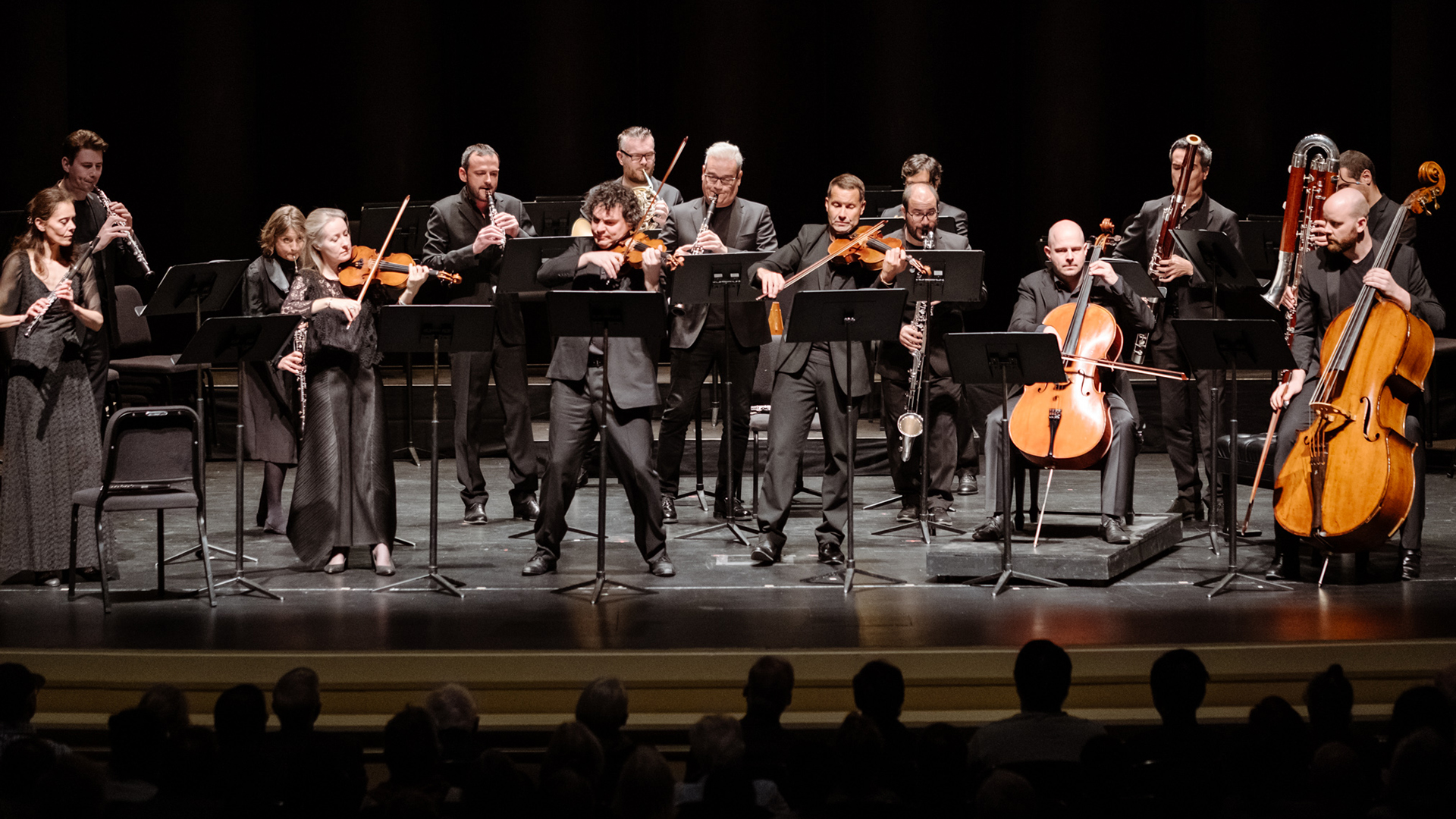
Mahler Chamber Orchestra
Fleur Barron
Igor Stravinsky (1882–1971)
Dumbarton Oaks, for chamber orchestra in E Flat Major (1937–1938) 15'
- Tempo giusto
- Allegretto
- Con moto
Luciano Berio (1925–2003)
Folk Songs, song cycle (1964/1973) 23'
- Black is the colour... (USA)
- I wonder as I wander (USA)
- Loosin yelav... (Armenien)
- Rossignolet du bois (France)
- A la femminisca (Sicily)
- La donna ideale (Italy)
- Ballo (Italy)
- Motettu de tristura (Sardinia)
- Malurous qu'o uno fenno (Auvergne, France)
- Lo fiolaire (Auvergne, France)
- Azerbaijan love song (Azerbaijan)
Wolfgang Amadeus Mozart (1756–1791)
Clarinet Quintet A major, KV 581 (1789) 30'
- Allegro
- Larghetto
- Menuetto
- Allegretto con variazioni


Shh… Please remember to silence your mobile phone.
Photographs may be taken before the concert begins and during the applause.
Program notes
Igor Stravinsky (1882–1971)
Although the music of Igor Stravinsky (1882–1971) remained identifiably and originally his own throughout his career, nearly all of his works feature the unabashed imitation or even copying of various earlier creators. It was basically impossible to predict what the style and character of his next work would be; in the course of 70 years of working life, his idiom morphed into all sorts of guises from Russian Romanticism to modern dodecaphony and even to jazz. His most prolific and stylistically coherent period was his Neo-Classical period, which began after the First World War and lasted for nearly 30 years.
His principal work from this period, Dumbarton Oaks (1938), is an obvious tribute to the concerto grosso genre of the 18th century, particularly the Brandenburg Concertos of J.S. Bach. He wrote the piece for the 30th wedding anniversary of Robert Woods Bliss, a diplomat and art collector in the USA, and his wife Mildred Barnes Bliss. The original title of the work was Dumbarton Oaks 8-v-1938, after the homestead of the Bliss family and the date of the anniversary. Stravinsky was ill at the time, and the premiere was conducted by his friend Nadia Boulanger, but Stravinsky himself conducted the work twice thereafter, one occasion being the Blisses’ gold wedding anniversary in 1958.
Dumbarton Oaks is in three movements and emulates the enormous garden of the Bliss estate with its prolific meandering and strictly right-angled walks. In keeping with the spirit of Baroque concertos, each instrument gets its moment in the limelight across the movements that range from the upbeat first movement through the lilting second movement to the raucous finale.
Luciano Berio (1925–2003)
Italy became a world leader in musical modernism in the mid-1930s when an entire generation of composers based their styles on serialism. In the crowd headed by Luigi Dallapiccola, Bruno Maderna, Luigi Nono and Giacinto Scelsi, perhaps the most diverse figure was Luciano Berio (1925–2003): he was one of the first composers to espouse electronics, and his Symphony is considered one of the most revolutionary innovations in new music. Folk Songs (1963/1973) is, like the Symphony, coloured by Berio’s worldview: humans are tied to an individual and a collective past that continuously comments on the present through memories, associations and allusions.
Folk Songs was written for Berio’s ex-wife, mezzosoprano Cathy Berberian. It is a mixed bag of songs from Sardinia, Sicily, the USA, France and Armenia, albeit only a small percentage of the content is actual folk music. The first two songs, ‘Black is the Colour’ and ‘I Wonder as I Wander’ are adaptations by composer John Jacob Niles (1892–1980) of traditional tunes, while ‘La donna ideale’ and ‘Ballo’ are Berio’s original compositions setting Italian folk poems. ‘Malurous qu’o uno fenno’ (Unhappy is he who has a wife) and ‘Lo Fiolairé’ (The spinner) are in Occitan and originate in Auvergne. The ‘Azerbaijani Love Song’ was transcribed by Berberian from a poor-quality record, and because she did not know the Azeri language at all, the lyrics make no sense whatsoever except for a single line in Russian that compares love to a hot stove.
Wolfgang Amadeus Mozart (1756–1791)
W.A. Mozart (1756–1791) had first used the clarinet in a couple of teenage divertimentos while on the road in Italy, but the instrument was not known, let alone played by anyone, in his home city of Salzburg. “I wish we had clarinets!” he wrote to his father from Mannheim in 1777. He first used the instrument in a symphony (No. 31) in Paris in the following year, but it was not until he became friends with Viennese clarinet virtuoso and fellow Freemason Anton Stadler that he thoroughly came to grips with it.
Intoxicated by the “humanlike” sound of the clarinet, Mozart wrote a Trio, a Quintet and a Concerto for Stadler, besides using the instrument for prominent solos in his Requiem and in his operas La clemenza di Tito and The Magic Flute. His Clarinet Quintet (1789) was not only the first work ever of its kind but also an important preliminary study for Mozart’s last instrumental work, the Clarinet Concerto (1791). The three-movement Quintet was originally written for the basset horn, the lower-pitched cousin of the clarinet, but today it is commonly performed on the A clarinet.
The coyly smiling mood of the piece, teetering on the edge of melancholy, may have been influenced by the really bad year that Mozart was having: heavy debt, death of a child, illness of his wife. Be that as it may, Mozart’s Clarinet Quintet inspired dozens of later composers from Weber to Brahms, who embraced the clarinet as a human voice in their chamber music.
Felix Mendelssohn (1809–1847)
Felix Mendelssohn (1809–1847) was the Sunday’s child of art music. He was born into the family of a banker, and his talent was noticed and nurtured at an early age. He was at home in the cultural circles of his community from childhood, was adept at networking and created a brilliant career as a composer, pianist and conductor. But the success story had its downside. Mendelssohn began to suffer from mounting self-criticism and turned into a perfectionist. He came to consider that he had written his best works in his teens. Eventually he became so insecure that he began to withhold his scores from the public.
One of the scores thus withheld was the Symphony in A major, written to a commission from the London Philharmonic Society. Its premiere in London in spring 1833 had been a huge success, but Mendelssohn, not pleased with the result, rewrote the score. Even then he was not happy, and the work was not printed until after his death. Traditionally numbered no. 4, it was in fact chronologically the third symphony that he wrote.
The Symphony was inspired by Mendelssohn’s trip to Italy in 1830. The second movement, for instance, was prompted by a religious procession in Naples. Mendelssohn would have been surprised at the enduring popularity of the work. He could not have guessed that audiences and musicians alike would continue to love its sunny disposition and brilliant orchestration. He would instead have moped over clumsy voice-leading or some such thing. Such can be the fate of a child prodigy.
Hugo Wolf (1860–1903)
Pjotr Tšaikovskin (1840–1893) kamppailu seksuaalisen identiteetin kanssa kulminoitui vuonna 1878. Silloin hänen kulissiavioliittonsa nuoreen naisoppilaaseen kaatui ennen kuin se ehti kunnolla alkaa. Hän joutui myöntämään olevansa homoseksuaali, tosin vain itselleen, mutta pakeni silti varmuuden vuoksi skandaalia Sveitsiin ja Italiaan, jotta saisi säveltää rauhassa juoruilta ja vainoilta. Kriisi vapautti Tšaikovskin taiteellisesti aivan uudelle tasolle. Etenkin sinfonioihin ilmestynyt elämäkerrallisuus tarjosi musiikin kerronnalle syvemmän, dramaattisia käänteitä tarjoavan pohjavireen.
Tšaikovskin kolme viimeistä sinfoniaa käsittelee kiellettyä, kohtalonomaista rakkautta, jota yksilön tahdonvoima ei kykene vastustamaan. Kuudes (1893) huipensi trilogian kouriintuntuvasti myös tosielämässä, sillä hän kuoli vain runsas viikko sinfonian kantaesityksen jälkeen. Arveltiin, että hänet olisi joko murhattu tai pakotettu itsemurhaan kostoksi paljastuneesta suhteestaan nuoreen sukulaispoikaan; todennäköisesti hän kuoli kuitenkin äkilliseen koleramyrkytykseen. Runsaat yhteensattumat ovat pitäneet huhut virkeinä näihin päiviin saakka.
Sinfonian lisänimi Pateettinen on Tšaikovskin veljen Modestin keksimä, ja harhaanjohtavasti käännetty. Venäjän kielessä pateettinen ei nimittäin tarkoita mahtipontista tai paatoksellista vaan pikemminkin tunteellista, intohimoista. Roihuavilla rakkauden tunnustuksilla alkava sinfonia päättyy pohjattomaan epätoivoon, kenties jopa kuolemaan.
Artists
Fleur Barron
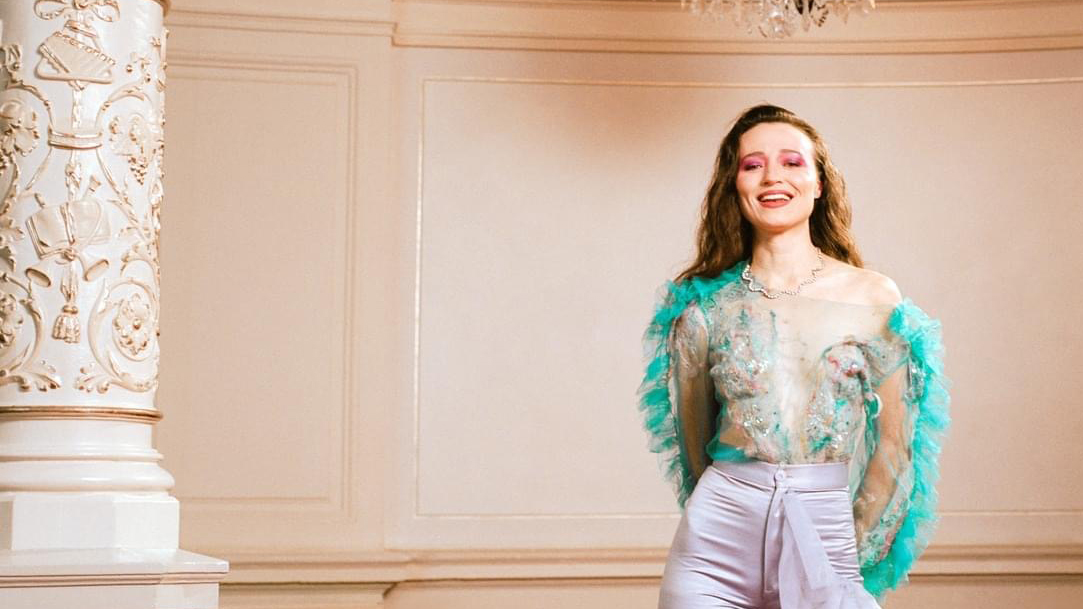
Hailed by The Times as “a knockout performer,” mezzo-soprano Fleur Barron won the 2025 Grammy Award for Best Opera Recording for her portrayal of the title role in Kaija Saariaho’s Adriana Mater with the San Francisco Symphony under Esa-Pekka Salonen.
Recent highlights include her debut with the New York Philharmonic under Gustavo Dudamel in the world premiere of David Lang’s The Wealth of Nations and her debut with the Berlin Philharmonic under Kirill Petrenko in Mahler’s Symphony No. 8 at the Salzburg Easter Festival. In 2027, she appears with the Orchestre de la Suisse Romande under Daniel Harding in Lili Boulanger’s Faust et Hélène.
Passionate about music’s power to foster cross-cultural dialogue, Barron curates inclusive chamber music programmes and regularly gives masterclasses at leading institutions in Europe, Asia and the United States. Born in Northern Ireland to a Singaporean mother and British father, she grew up in Hong Kong and later New York.
Hayato Sumino

Japanese pianist Hayato Sumino (b. 1995) has gained an international following both on stage and online, where he reaches more than 2.2 million followers. He has performed with major orchestras including the NHK Symphony Orchestra, Tokyo Philharmonic Orchestra, Netherlands Radio Philharmonic Orchestra, Baltimore Symphony Orchestra and Chicago Symphony Orchestra. In 2024, he received the Leonard Bernstein Award of the Schleswig-Holstein Music Festival and two Opus Klassik Awards.
In November 2025, Sumino made history by giving the first piano recital at Yokohama’s K-Arena. With more than 18,000 tickets sold, the performance was recognised by Guinness World Records as the largest indoor piano recital ever held.
Recent highlights include his debut at the Beijing Music Festival performing Prokofiev’s Third Piano Concerto with the BBC Philharmonic under John Storgårds.
Mahler Chamber Orchestra
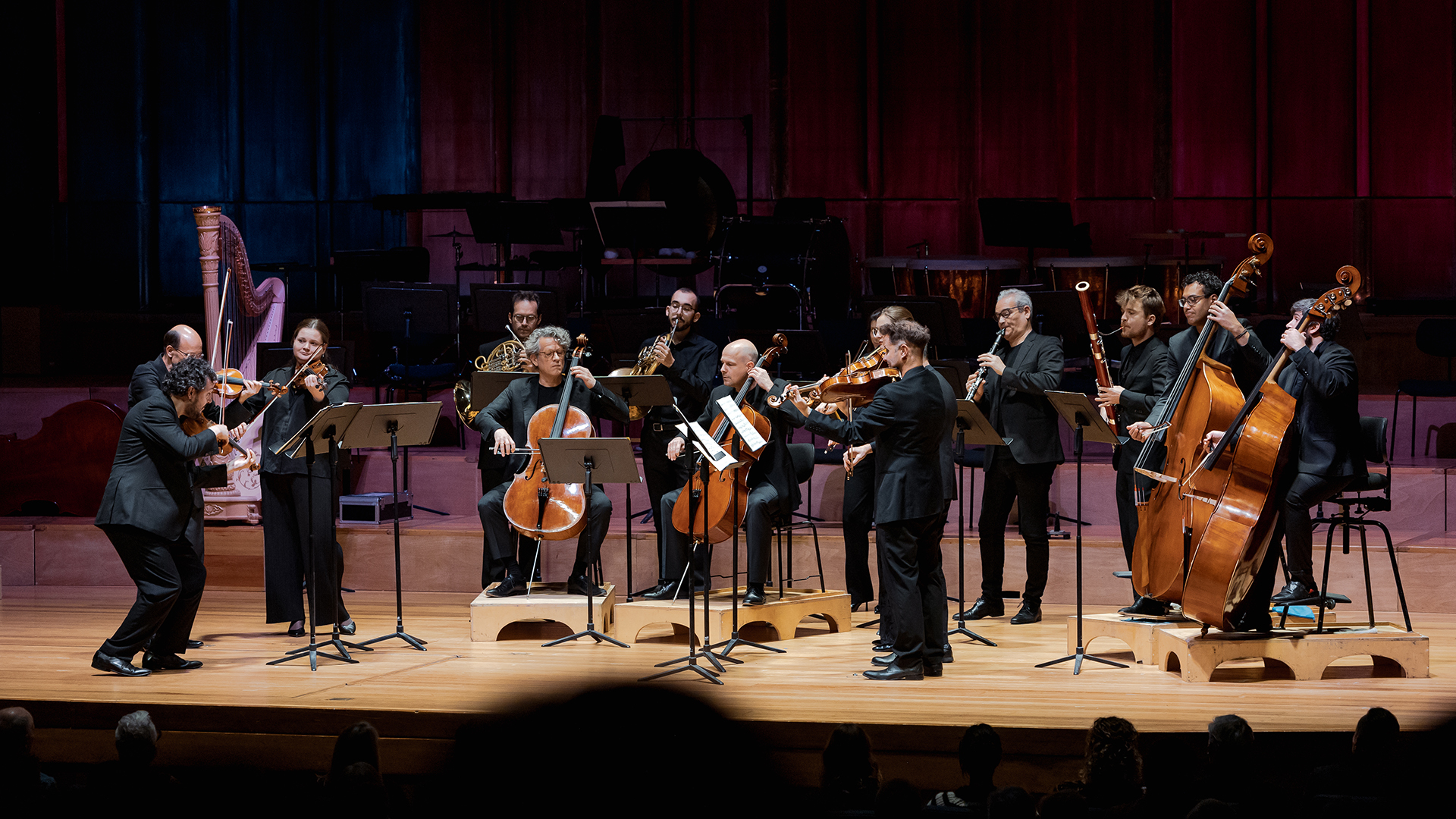
Founded in 1997, the Mahler Chamber Orchestra (MCO) has developed a distinctive sound and artistic identity shaped by its democratic structure, with musicians working closely alongside its management. The orchestra has performed in more than 40 countries across five continents.
Renowned for its chamber music approach to orchestral playing, the MCO combines the energy of highly individual musicians with a repertoire spanning Viennese Classicism, early Romanticism and contemporary music. The artistic legacy of founder Claudio Abbado and Conductor Laureate Daniel Harding continues to influence the orchestra’s sound today. Current Artistic Partners include pianists Mitsuko Uchida and Yuja Wang, violinist Augustin Hadelich and violist Antoine Tamestit.
The MCO forms the core of the Lucerne Festival Orchestra each summer and regularly appears at leading festivals and concert halls across Europe. Recent tours have included Lucerne, Italy and Slovenia before MCO’s visit to Helsinki.
Now a band of 102 musicians, the Helsinki Philharmonic Orchestra annually performs to a total audience of over 110,000.
In addition to its activities in Helsinki, the orchestra reaches international audiences through touring abroad and an active recording programme. The HKO Screen concerts, available online both as live streams and on-demand recordings, together with background interviews, bring viewers around the world closer to the creative process behind a musical work.
Jukka-Pekka Saraste has served as the chief conductor and artistic leader of the orchestra since 2023. During the seasons 2026–2028 the post of the principal guest conductor is filled by the orchestra itself, with concerts performed without a conductor and with programs planned by the musicians themselves.
- Matthew Truscott, concert master (United Kingdom)
- Simona Bonfiglioli (Sweden)
- Hwa-Won Rimmer Pyun (Germany)
- Florian Peelman (Belgium/Australia)
- Yannick Dondelinger (United Kingdom)
- Frida Oliver (Norway)
- Frank-Michael Guthmann (Germany)
- Jakob Stepp (Germany)
- Lars Radloff (Germany)
- Johann Warzecha (Germany)v
Chiara Tonelli (Italy)
- Domenico Orlando (Italy)
- Carlo Mistretta (Italy)
Vicente Alberola Ferrando (Spain)
Chiara Santi (Italy)
- Eirik Haaland (Norway)
- Tommi Hyytinen (Finland)
- Martin Piechotta (Germany)
- Daan Wilms (Belgium)
Gael Gandino (France)
- Matthew Muller
- Janne Lastumäki
- Peetu Hänninen
More musical energy
Heavenly lights
Next HKO screen #HKOSCREEN
Direct broadcast 28/10/2026 at 7PM
helsinginkaupunginorkesteri.fi | helsinkikanava.fi
Production
Programme notes
Translations
Artist bios
Fotos
Contact details
www.helsinginkaupunginorkesteri.fi
helsinki.philharmonic@hel.fi
Helsingin kaupunginorkesteri
Musiikkitalo, Mannerheimintie 13 A, Helsinki
PL 10403, 00099 Helsingin kaupunki