Ad Spiram, concerto for symphony orchestra (World Premiere) (2026) 29'
Symphony No. 6 in A Major (ed. Leopold Nowak) (1881) 54'


Sebastian Fagerlund (b. 1972) is creating a successful international career with energetically mobile and darkly lyrical music. His idiom incorporates recognisable influences from modernism but also from heavy metal and film music in a kind of pluralism that comes naturally for composers of Fagerlund’s generation. His output includes orchestral works, solo concertos, chamber music and vocal music. Audiences in Helsinki know him above all as an opera composer, as he scored a hit at the Finnish National Opera with his opera Höstsonaten (Autumn Sonata, 2015–2017), based on the film by Ingmar Bergman. He followed on from this success with the equally well received Morgonstjärnan (The Morning Star, 2025), based on a novel by Karl Ove Knausgård, premiered early in the current year.
Fagerlund wrote his organ concerto Ad Spiram, being given its world premiere in this programme, to a joint commission from the Helsinki Philharmonic Orchestra, the Polish National Radio Symphony Orchestra, the Gothenburg Symphony Orchestra and the Dresden Philharmonic Orchestra. The work is dedicated to Iveta Apkalna.
The composer writes: “Ad Spiram, loosely translated from Latin, means ‘towards the spiral’ or ‘towards the vortex’. The Latin word ‘spirare’ means ‘to breathe’. These two meanings were strongly in my mind during the composition phase. I have had an abstract image of columns of air that intertwine in a spiral and the idea of the instrument itself that breathes.”
Anton Bruckner (1824–1896) was mocked by critics nearly all his life, and his Sixth Symphony, completed in 1881, made no exception. After the premiere of its 2nd and 3rd movements in Vienna, Eduard Hanslick, outraged, wrote in his review: “It has become ever harder for me personally to achieve a proper relationship with these peculiar compositions in which clever, original, and even inspired moments alternate frequently without recognisable connection with barely understandable platitudes, empty and dull patches, stretched out over such unsparing length as to threaten to run players as well as listeners out of breath.”
The Symphony was not premiered in full until after Bruckner’s death, in 1899, and even then several cuts to the score had been made by the conductor, Bruckner’s pupil Gustav Mahler. The original, uncut version was premiered in Stuttgart in 1901.
Bruckner often felt compelled to revise his works time and time again, but the Sixth Symphony forms an exception. We might be justified in concluding that for once he thought he had got something right on the first attempt. The Symphony has four movements, typically for Bruckner. The first movement and the scherzo are infused with infectious kinetic energy, while the slow movement evokes an atmosphere of sanctity. The finale is a journey with twists and turns, culminating in the triumphant return of the main subject of the first movement.
The premiere in Paris in 1911 of the ballet Petrushka by Igor Stravinsky (1882–1971) was an absolute sensation in every way: music, choreography, staging and singing. He had composed it as a commission from the director of the Ballets Russes in Paris, Sergei Diaghilev, and based it on a piece for piano and orchestra he was already working on.
Petrushka is a puppet who comes to life and the ballet is set in a Shrovetide Fair. Stall-holders are shouting their wares, people are laughing, someone is playing a barrel organ, and a merry-go-round can be heard. A magician begins his performance and the crowd cries out in delight at the three dancing puppets: Petrushka, a Ballerina and a Moor. Petrushka is hopelessly in love with the Ballerina, who cares not a bit for him. When the Moor and the Ballerina dance cheek-to-cheek, Petrushka flies into a jealous rage and gets into a fight with the Moor, who kills him with his scimitar. Maybe they are only puppets, but Petrushka’s ghost is spotted on the roof.
Felix Mendelssohn (1809–1847) was the Sunday’s child of art music. He was born into the family of a banker, and his talent was noticed and nurtured at an early age. He was at home in the cultural circles of his community from childhood, was adept at networking and created a brilliant career as a composer, pianist and conductor. But the success story had its downside. Mendelssohn began to suffer from mounting self-criticism and turned into a perfectionist. He came to consider that he had written his best works in his teens. Eventually he became so insecure that he began to withhold his scores from the public.
One of the scores thus withheld was the Symphony in A major, written to a commission from the London Philharmonic Society. Its premiere in London in spring 1833 had been a huge success, but Mendelssohn, not pleased with the result, rewrote the score. Even then he was not happy, and the work was not printed until after his death. Traditionally numbered no. 4, it was in fact chronologically the third symphony that he wrote.
The Symphony was inspired by Mendelssohn’s trip to Italy in 1830. The second movement, for instance, was prompted by a religious procession in Naples. Mendelssohn would have been surprised at the enduring popularity of the work. He could not have guessed that audiences and musicians alike would continue to love its sunny disposition and brilliant orchestration. He would instead have moped over clumsy voice-leading or some such thing. Such can be the fate of a child prodigy.
Pjotr Tšaikovskin (1840–1893) kamppailu seksuaalisen identiteetin kanssa kulminoitui vuonna 1878. Silloin hänen kulissiavioliittonsa nuoreen naisoppilaaseen kaatui ennen kuin se ehti kunnolla alkaa. Hän joutui myöntämään olevansa homoseksuaali, tosin vain itselleen, mutta pakeni silti varmuuden vuoksi skandaalia Sveitsiin ja Italiaan, jotta saisi säveltää rauhassa juoruilta ja vainoilta. Kriisi vapautti Tšaikovskin taiteellisesti aivan uudelle tasolle. Etenkin sinfonioihin ilmestynyt elämäkerrallisuus tarjosi musiikin kerronnalle syvemmän, dramaattisia käänteitä tarjoavan pohjavireen.
Tšaikovskin kolme viimeistä sinfoniaa käsittelee kiellettyä, kohtalonomaista rakkautta, jota yksilön tahdonvoima ei kykene vastustamaan. Kuudes (1893) huipensi trilogian kouriintuntuvasti myös tosielämässä, sillä hän kuoli vain runsas viikko sinfonian kantaesityksen jälkeen. Arveltiin, että hänet olisi joko murhattu tai pakotettu itsemurhaan kostoksi paljastuneesta suhteestaan nuoreen sukulaispoikaan; todennäköisesti hän kuoli kuitenkin äkilliseen koleramyrkytykseen. Runsaat yhteensattumat ovat pitäneet huhut virkeinä näihin päiviin saakka.
Sinfonian lisänimi Pateettinen on Tšaikovskin veljen Modestin keksimä, ja harhaanjohtavasti käännetty. Venäjän kielessä pateettinen ei nimittäin tarkoita mahtipontista tai paatoksellista vaan pikemminkin tunteellista, intohimoista. Roihuavilla rakkauden tunnustuksilla alkava sinfonia päättyy pohjattomaan epätoivoon, kenties jopa kuolemaan.

Jukka-Pekka Saraste, Chief Conductor and Artistic Director of the Helsinki Philharmonic Orchestra, has established himself as one of the outstanding conductors of his generation. Born in Finland in 1956, he began his career as a violinist. Today, he is renowned as an artist of exceptional versatility and breadth.
Saraste has previously held principal conductorships at the WDR Symphony Orchestra in Cologne, the Oslo Philharmonic Orchestra, the Finnish Radio Symphony Orchestra, the Toronto Symphony Orchestra, and the Scottish Chamber Orchestra, and has served as Principal Guest Conductor of the BBC Symphony Orchestra. As a guest conductor, he appears with major orchestras worldwide, including the Orchestre de Paris, the London Philharmonic Orchestra, the Staatskapelle Berlin, the Cleveland Orchestra, the New York Philharmonic Orchestra, and the Symphony Orchestras of Boston, Chicago, and San Francisco.
Coaching and mentoring young musicians is of great importance to Saraste. He is a founding member of the LEAD! Foundation, a mentorship programme for young conductors and soloists.
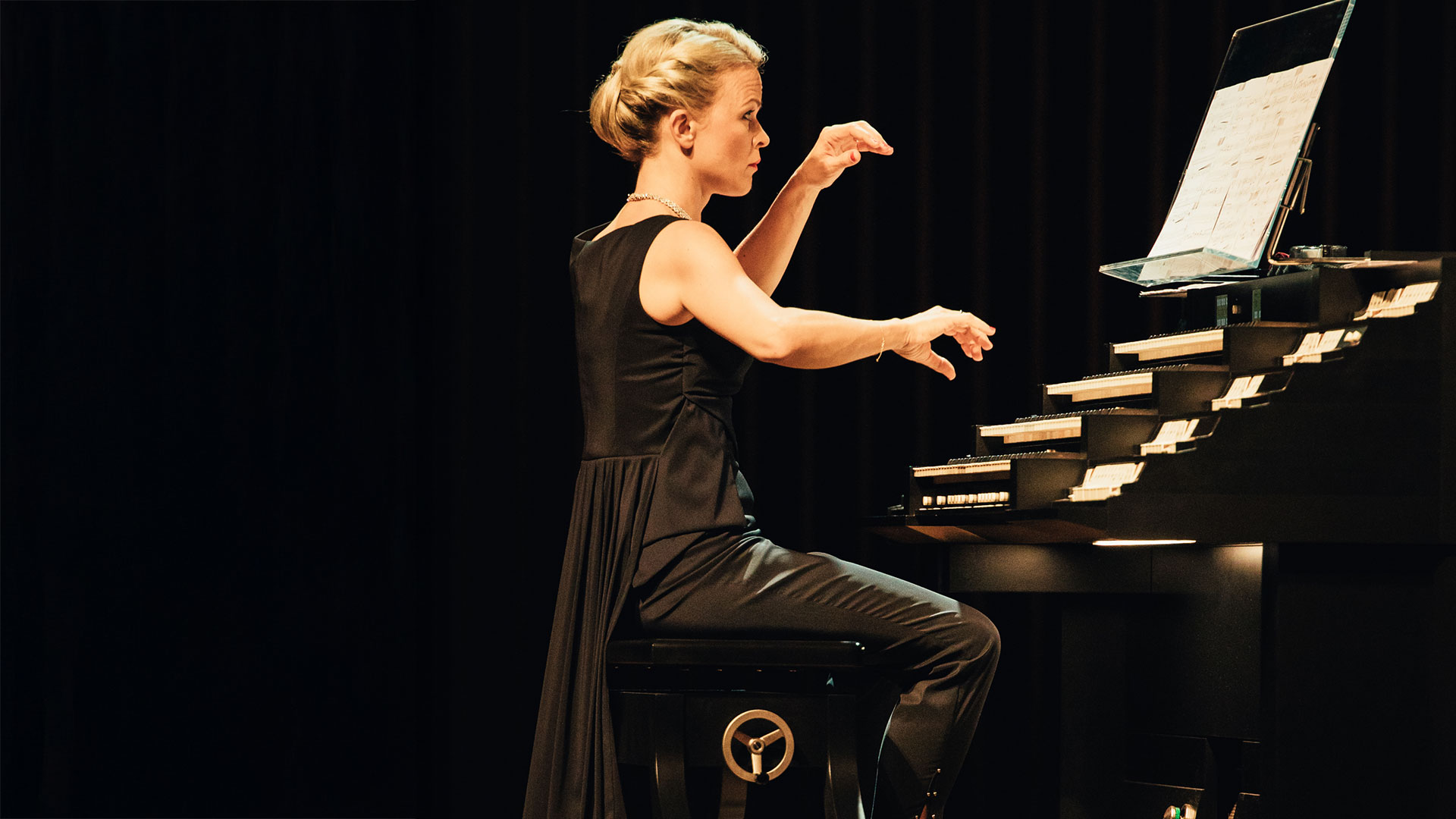
Latvian organist Iveta Apkalna (b. 1976) is widely regarded as one of the leading organists of her generation. Since 2017, she has served as titular organist of Hamburg’s Elbphilharmonie, inaugurating the hall’s Klais organ at its opening concerts. Since 2019, she has also been Artist-in-Residence at the Concert Church in Neubrandenburg as part of the Mecklenburg-Vorpommern Festival.
Apkalna’s international breakthrough came in 2008 with a performance alongside the Berlin Philharmonic under Claudio Abbado. She has since appeared with major orchestras including the Bavarian Radio Symphony Orchestra, Royal Concertgebouw Orchestra, Los Angeles Philharmonic, Royal Stockholm Philharmonic Orchestra, Cleveland Orchestra and Tonhalle-Orchester Zürich.
She is also frequently invited to inaugurate new organs around the world, most recently in Prague, Katowice and Kaohsiung. Among her recent highlights are performances of Esa-Pekka Salonen’s Sinfonia Concertante with the Chicago Symphony Orchestra under the composer’s direction.
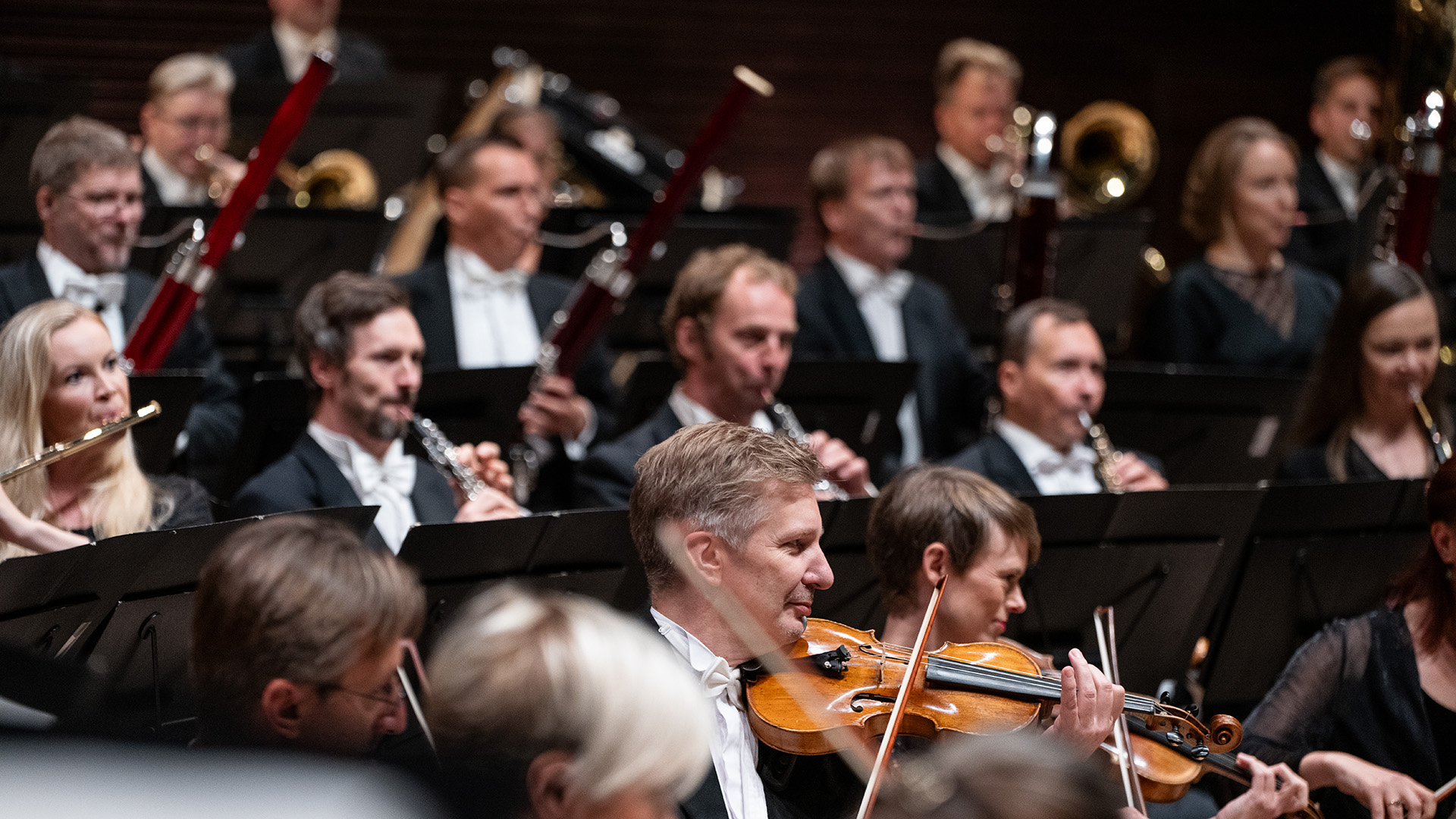
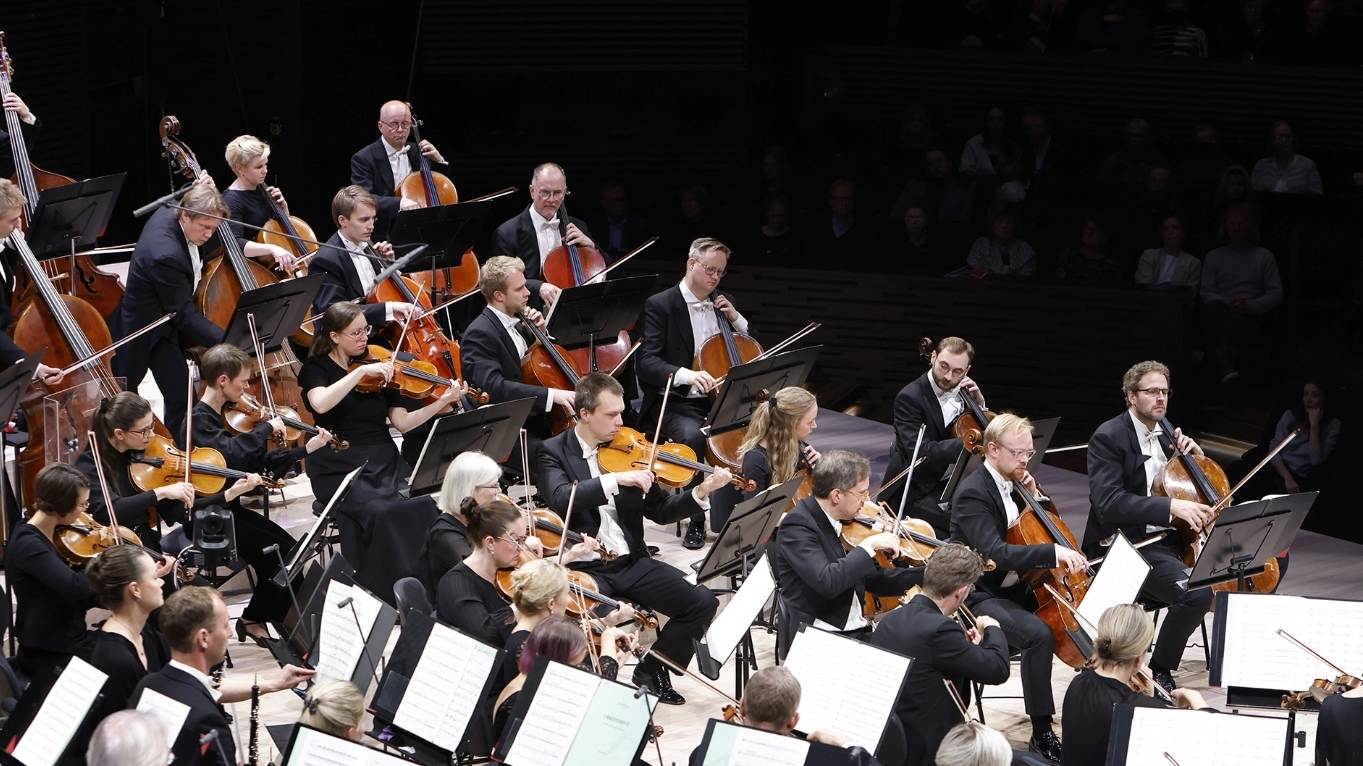
The principle of putting on regular concerts given by an orchestra of top musicians has remained right up to the present day in the over 140 years since the Helsinki Philharmonic Orchestra was formed. It premiered most of the symphonic works by Jean Sibelius with the composer himself conducting, and continues its commitment to contemporary music by commissioning works by composers both Finnish and foreign.
Now a band of 102 musicians, the Helsinki Philharmonic Orchestra annually performs to a total audience of over 100,000 and has become an important constituent of its host city’s cultural capital. The orchestra’s work also touches those who, for one reason or another, are unable to attend concerts at the Helsinki Music Centre. The orchestra performs in a variety of ensembles throughout Helsinki, provides performance opportunities for children and young people, and reaches special groups through its wide-ranging education and outreach activities. The orchestra’s HPO Kids program, launched in 2000, has expanded into Culture Kids, a city-wide cultural program for children across Helsinki.
In addition to its activities in Helsinki, the orchestra reaches international audiences through touring abroad and an active recording programme. The HKO Screen concerts, available online both as live streams and on-demand recordings, together with background interviews, bring viewers around the world closer to the creative process behind a musical work.
Jukka-Pekka Saraste has served as the chief conductor and artistic leader of the orchestra since 2023. During the seasons 2026–2028 the post of the principal guest conductor is filled by the orchestra itself, with concerts performed without a conductor and with programs planned by the musicians themselves.
Anna-Leena Haikola
Teija Kivinen
Kamran Omarli
Teppo Ali-Mattila
Eva Ballaz
Heini Eklund
Serguei Gonzalez Pavlova
Matilda Haavisto
Linda Hedlund
Siljamari Heikinheimo
Siiri Rasta
Krista Rosenberg
David Seixas
Virpi Taskila
Torsten Tiebout
Atte Kilpeläinen
Lotta Poijärvi
Petteri Poijärvi
Aulikki Haahti-Turunen
Kaarina Ikonen
Tiila Kangas
Ulla Knuuttila
Maria Mangeloja
Carmen Moggach
Markus Sallinen
Hajnalka Standi-Pulakka
Tuomas Ylinen
Lauri Kankkunen
Beata Antikainen
Jaani Helander
Veli-Matti Iljin
Jaakko Rajamäki
Ilmo Saaristo
Saara Särkimäki
Pekka Smolander
Johannes Välja
Ville Väätäinen
Oskari Hänninen
Johane Gonzalez Seijas
Paul Aksman
Eero Ignatius
Tuomo Matero
Adrian Rigopulos
Pauli Pappinen
Hannu Perttilä
Jussi Jaatinen
Paula Malmivaara
Nils Rõõmussaar
Carlos Yiu Erdocia
Samuel Buron-Mousseau
Anna-Maija Korsimaa
Heikki Nikula
Clara Riccucci
Ilkka Marttila
Xavi Castelló Aràndiga
Pasi Suomalainen
www.helsinginkaupunginorkesteri.fi
helsinki.philharmonic@hel.fi
Helsingin kaupunginorkesteri
Musiikkitalo, Mannerheimintie 13 A, Helsinki
PL 10403, 00099 Helsingin kaupunki