Program
Swansong
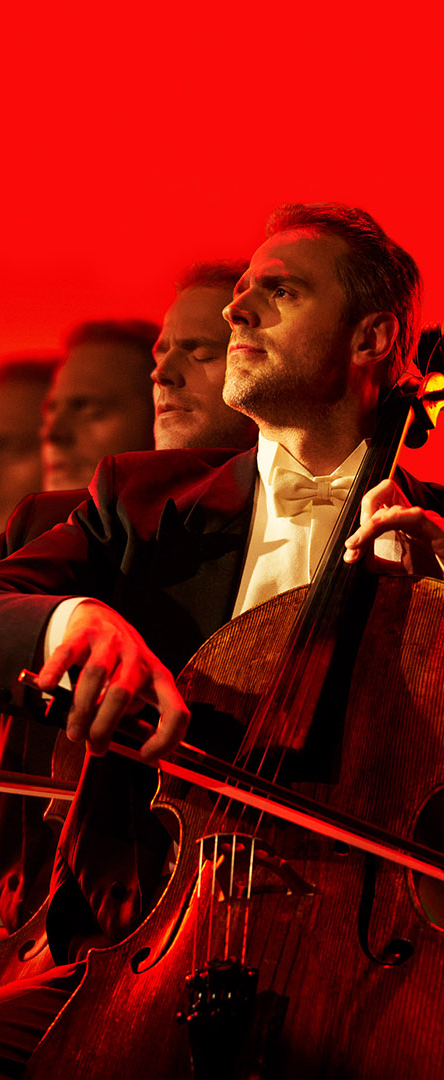
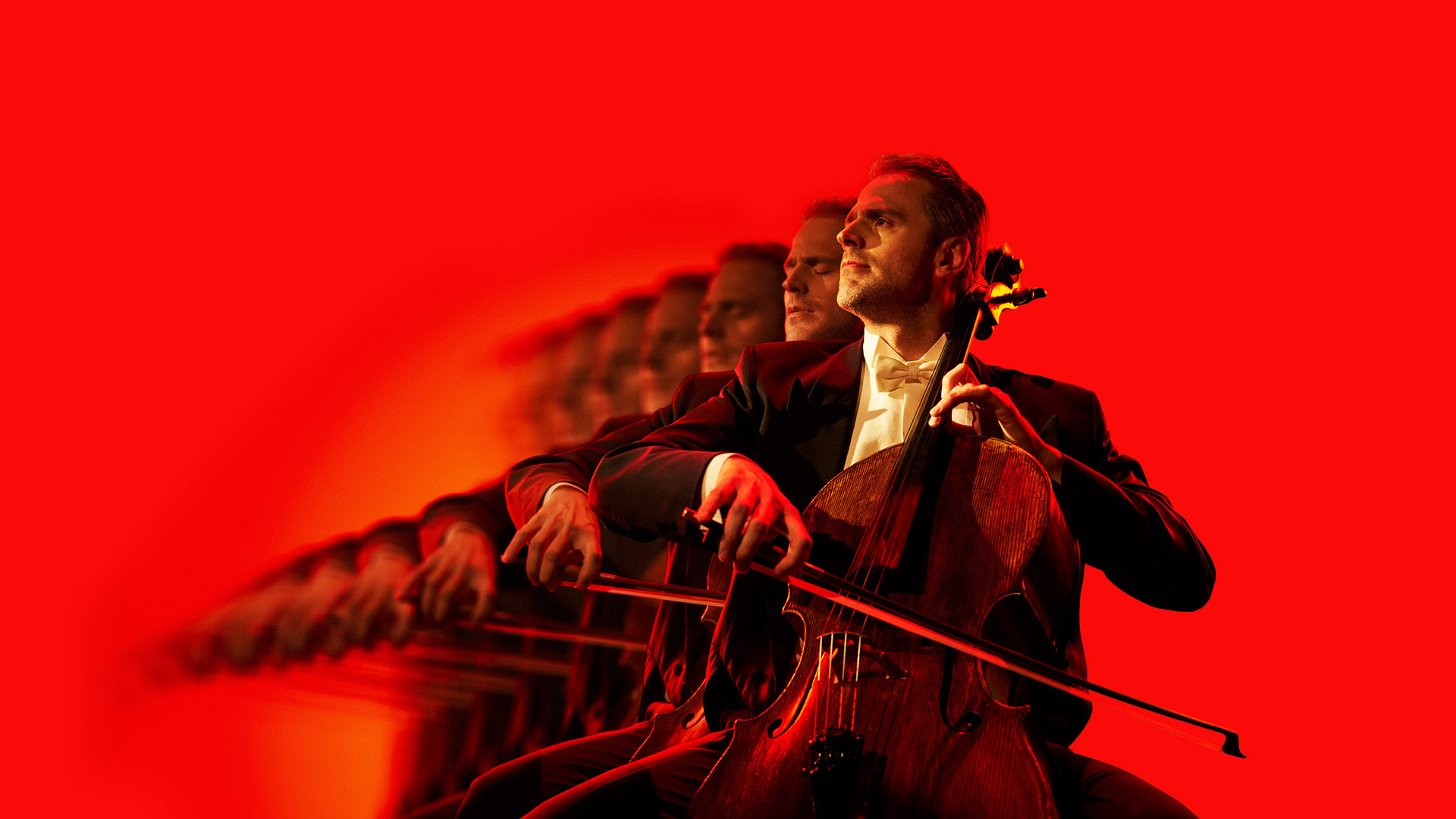
Risto Joost
Arvo Pärt (1935–)
Swansong – Hamburger Fassung (2013/2021) 6'
Arvo Pärt (1935–)
Adam's Lament (2009) 24'
Dmitri Šostakovitš (1906–1975)
Symphony No. 15 in A Major (1971) 42'
- Allegretto
- Adagio (attacca)
- Allegretto
- Adagio - Allegretto


Shh… Please remember to silence your mobile phone.
Photographs may be taken before the concert begins and during the applause.
Program notes
Arvo Pärt
Estonian composer Arvo Pärt (b. 1935) has for decades been one of the most popular composers of our time. His music speaks directly to the heart and soul through minor triads, melodies inspired by Renaissance music and pointillist rhythms evoking a cathedral-like echo effect. Pärt describes the technique with the term tintinnabuli, referring to the sound of bells. He developed this technique during his artistic transition period in the 1970s. He has noted that “tintinnabulation is an area where I sometimes stray when searching for answers — in life, in my music, in my work. In my darkest moments I feel confident that everything beyond this one thing is meaningless.”
Swansong (2014) is an instrumental version of Littlemore Tractus (2000) for choir and organ and was written for the Mozart Week in Salzburg. Pärt spent nearly two years writing the original Tractus, even though it is only about seven minutes long; he wanted to ensure that the tiny parish of Littlemore in Oxford that commissioned the piece had the full support of the Catholic, Orthodox and Anglican churches for the project.
Underlying Swansong is the most famous sermon by English Cardinal John Henry Newman (1801–1891), titled Wisdom and Innocence, particularly its concluding prayer: “May He support us all the day long, till the shades lengthen, and the evening comes, and the busy world is hushed, and the fever of life is over, and our work is done! Then in His mercy may He give us safe lodging, and a holy rest, and peace at the last!”
Arvo Pärt
Dmitri Šostakovitš
By 1971, Dmitri Shostakovich (1906–1975) had become a celebrated composer. Gone were the years of his constant fear of Stalin’s displeasure and the regime. He was, however, in poor health and his thoughts were turning to death. His 15th – and last – symphony was to have been a cheerful one, but it has gone down in history as above all a great mystery. It abounds in recognisable musical quotations, such as to Rossini’s opera Wilhelm Tell, to Wagner’s Siegfried themes (the funeral march and fate theme) and the overture to Tristan, and to his own fourth and seventh symphonies. David Lynch, master of the surreal, was heavily under its influence when he made his breakthrough film Blue Velvet (1986).
But the symphony has also been interpreted as a nod to history, a jibe at the system, and above all as Shostakovich’s own musical testament. His own interpretation was more down-to-earth: “I don't myself quite know why the quotations are there, but I could not, could not, not include them.” The snatches of Richard Strauss’s Ein Heldenleben and Beethoven’s Egmont Overture have further enhanced the autobiographical interpretation, and the closing bars are said by some to echo the electronic beep of the hospital ward.
Artists
Risto Joost

Estonian conductor Risto Joost (b. 1980) is acclaimed for his artistic versatility and has gained widespread recognition for his work both in the opera pit and on the concert stage. Since the 2024/25 season, Risto Joost has served as Chief Conductor of the Württemberg Chamber Orchestra Heilbronn, and he also holds the position of Artistic Director and Chief Conductor of the Estonian National Theatre Vanemuine in Tartu. He has previously held major artistic positions such as Chief Conductor of the Tallinn Chamber Orchestra and has been a long-standing conductor of the Estonian National Opera.
Risto Joost is in demand as a guest conductor with orchestras such as the Helsinki Philharmonic, Bergen Philharmonic, Norwegian National Opera Orchestra, Tampere Philharmonic, and Tapiola Sinfonietta. Between the 2026 and 2029 seasons, he will present Richard Wagner’s Ring cycle in collaboration with the Estonian National Theatre Vanemuine and the Saaremaa Opera Festival.
Helsinki Music Centre Chorus
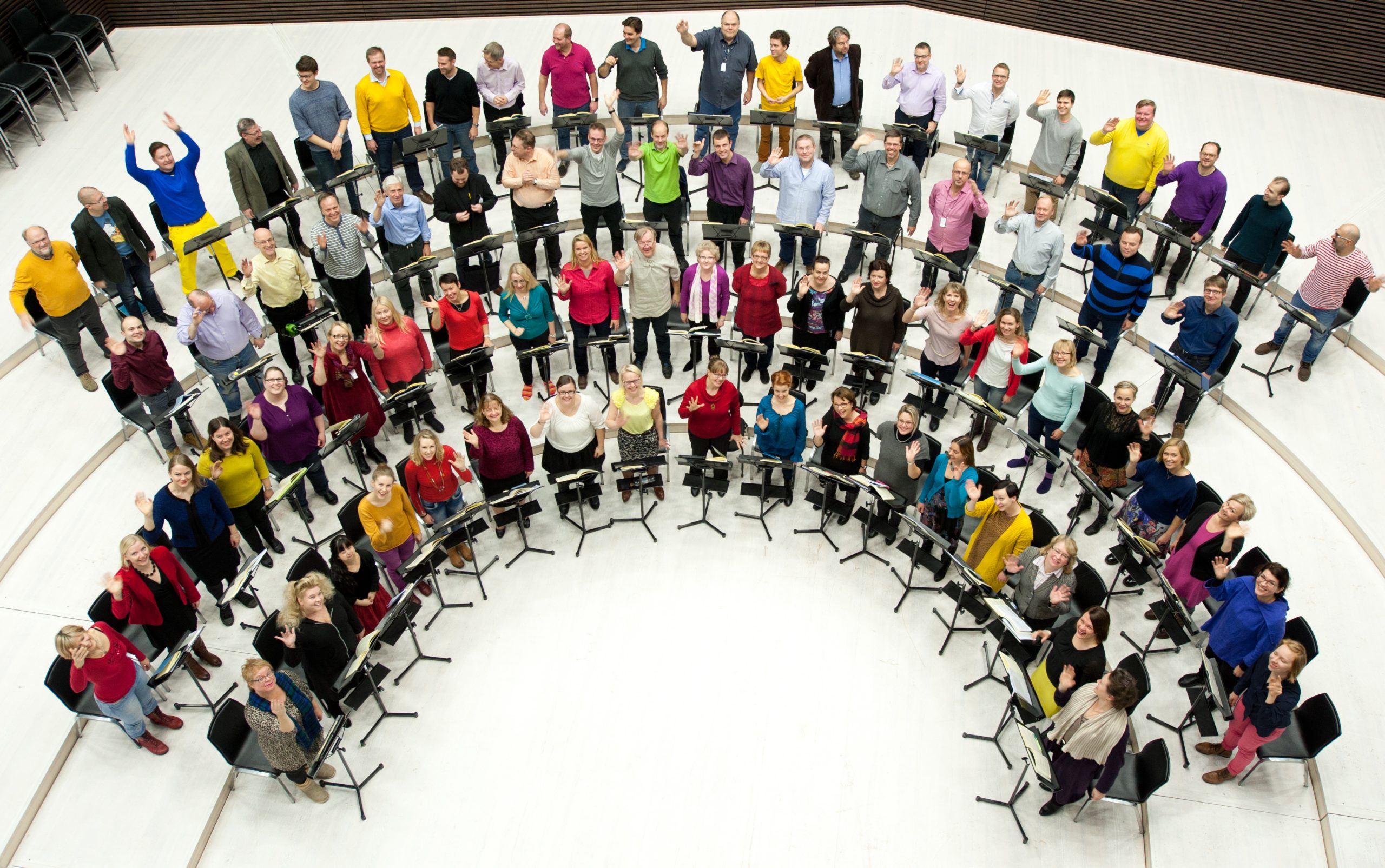
The Helsinki Music Centre Chorus is a symphonic choir of 130 singers that can also be transformed into a male or a female choir if necessary. The choir collaborates with the resident organisations of the Helsinki Music Centre: the Helsinki Philharmonic Orchestra, the Finnish Radio Symphony Orchestra and the Sibelius Academy of the University of the Arts Helsinki. The artistic director of the choir is the Professor of Choral Conducting Nils Schweckendiek. The choir was founded in 2011.
The choir’s repertoire consists of symphonic choral and orchestral works, complemented by a cappella works for a chorus. The repertoire covers all musical eras, including contemporary music. The programme is planned on a long-term basis in collaboration with the resident organisations of the Music Centre. The choir performs eight to ten times a year, mainly in the Helsinki Music Centre, but also elsewhere.
www.musiikkitalonkuoro.fi
Helsinki Philharmonic Orchestra
The principle of putting on regular concerts given by an orchestra of top musicians has remained right up to the present day in the over 140 years since the Helsinki Philharmonic Orchestra was formed. It premiered most of the symphonic works by Jean Sibelius with the composer himself conducting, and continues its commitment to contemporary music by commissioning works by composers both Finnish and foreign.
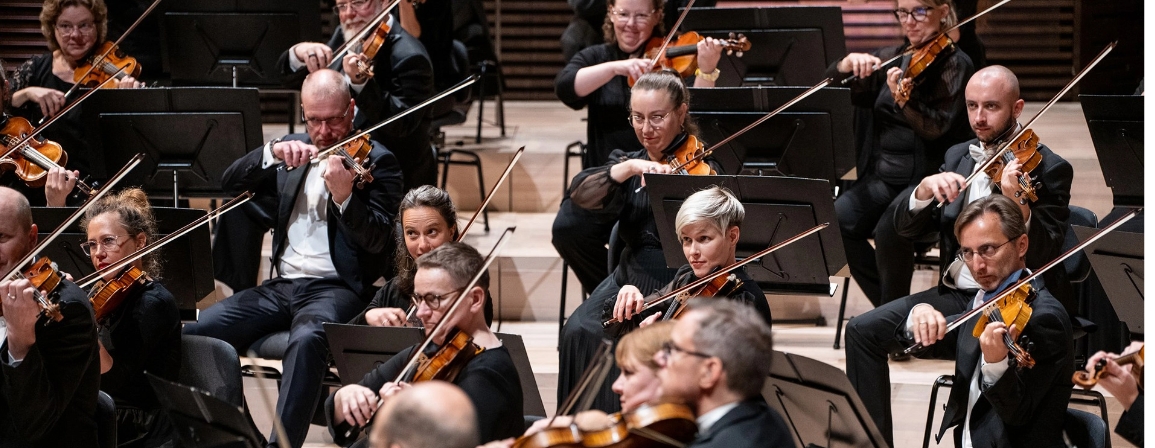
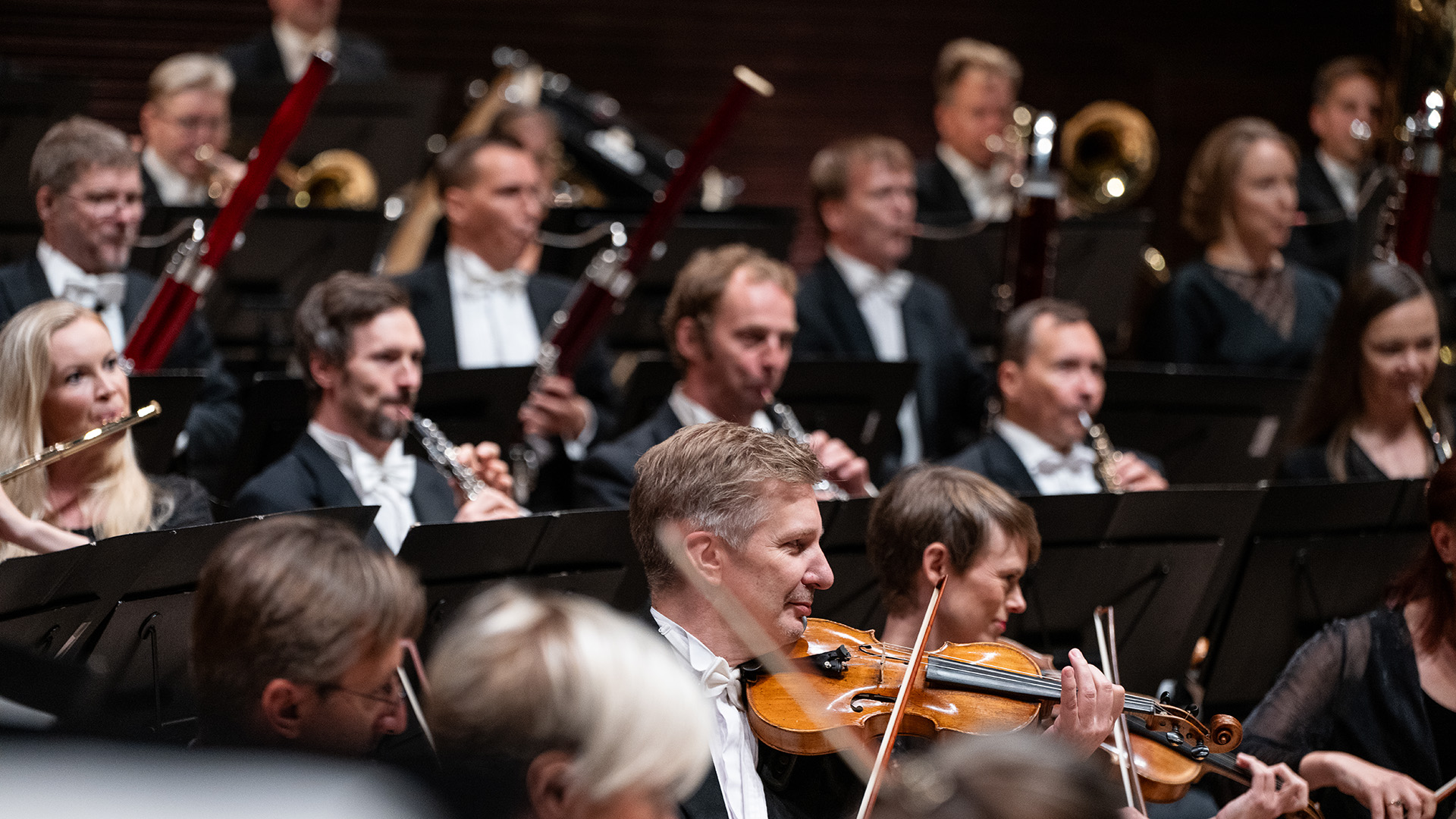
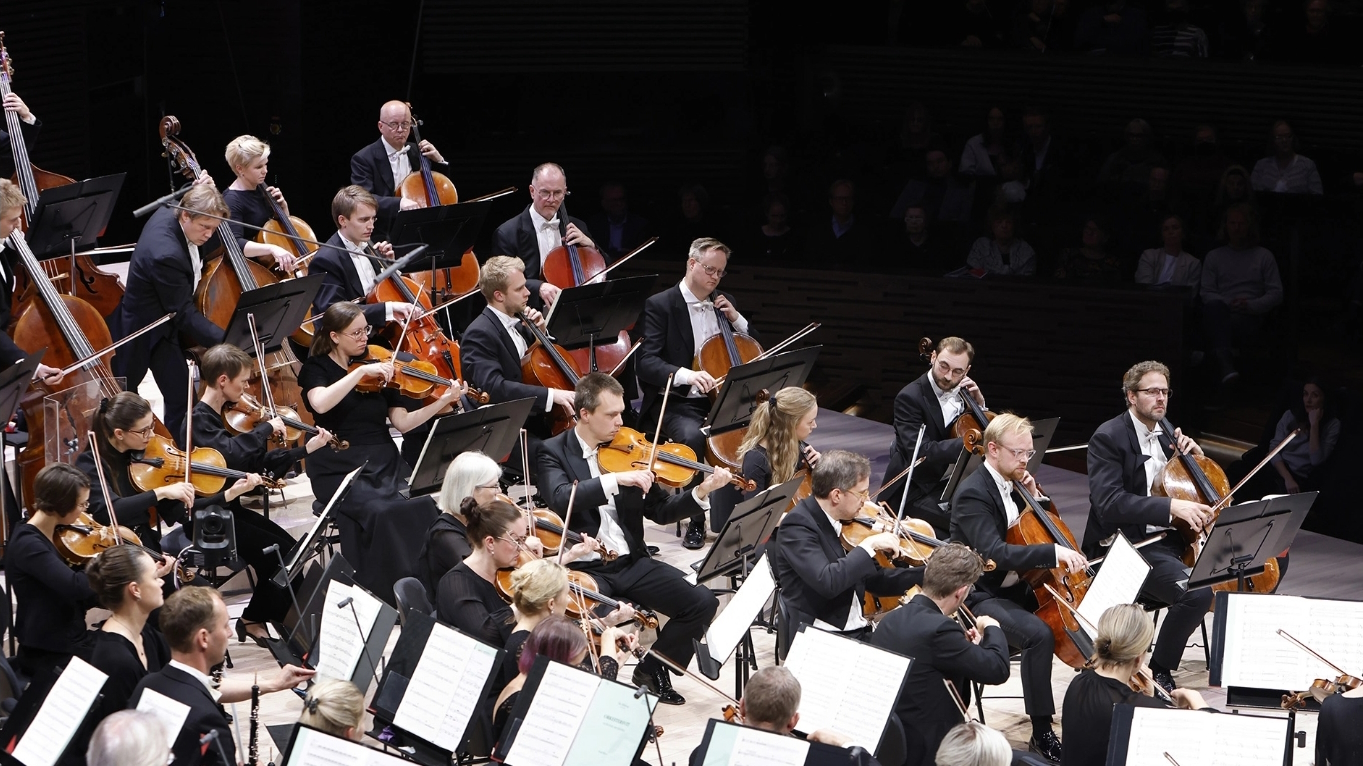
Now a band of 102 musicians, the Helsinki Philharmonic Orchestra annually performs to a total audience of over 110,000 and has become an important constituent of its host city’s cultural capital. It also reaches people who for one reason or another cannot attend concerts at the Helsinki Music Centre, for in addition to making international tours, it sends small ensembles out across the city, provides opportunities for young people to perform and, through its active education programme, is able to make contact with special groups. For the third time it invited an entire age group – this time all the children born in Helsinki in 2020 – to enjoy music with their families over the next seven years as members of the HPO Kids -program.
Now a band of 102 musicians, the Helsinki Philharmonic Orchestra annually performs to a total audience of over 110,000.
The HKO Screen concerts and background interviews screened live or recorded on the Internet makes the process of creating a piece of music even more readily accessible.
The orchestra has a three-member Artistic Leadership Team, which comprises Chief Conductor and Artistic Director Jukka-Pekka Saraste, Principal Guest Conductor and Artistic Co-director Pekka Kuusisto and Composer-in-Residence Anna Thorvaldsdottir.
- Kreeta-Julia Heikkilä
Sara Etelävuori
Elina Viitasaari
Eija Hartikainen
Maiju Kauppinen
Kati Kuusava
Helmi Kuusi
Elina Lehto
Kari Olamaa
Petri Päivärinne
Kalinka Pirinen
Satu Savioja
Celina Blasco Bronisz
Sanna Kokko
Öykü Melis Sahin
Pia Sundroos
Kaia Voitka
Kamran Omarli
Teija Kivinen
Teppo Ali-Mattila
Heini Eklund
Serguei Gonzalez Pavlova
Linda Hedlund
Liam Mansfield
Siiri Rasta
Krista Rosenberg
Ángeles Salas Salas
Virpi Taskila
Ruben Goesch
Emmi Peltola
Torsten Tiebout
Lotta Poijärvi
Petteri Poijärvi
Aulikki Haahti-Turunen
Kaarina Ikonen
Tiila Kangas
Ulla Knuuttila
Mariette Reefman
Markus Sallinen
Hajnalka Standi-Pulakka
Ana Robles Galindo
Julie Svacinová
Lauri Kankkunen
Tuomas Ylinen
Saara Särkimäki
Jaani Helander
Veli-Matti Iljin
Jaakko Rajamäki
Ilmo Saaristo
Johannes Välja
Tommi Wesslund
Woo Suk Jeong
Ville Väätäinen
Tuomo Matero
Eero Ignatius
Paul Aksman
Adrian Rigopulos
Henri Dunderfelt
Taavi Korhonen
Maria Krykov
Elina Raijas
Päivi Korhonen
Jenny Villanen
Hannu Perttilä
Jussi Jaatinen
Cristian Moré Coloma
Samuel Buron-Mousseau
Anna-Maija Korsimaa
Helmi Malmgren
Mikko-Pekka Svala
Noora Van Dok
Ruben Buils Garcia
Ville Hiilivirta
Mika Paajanen
Joonas Seppelin
- David Busawon
Mika Tuomisalo
Valtteri Malmivirta
Anu Fagerström
Jussi Vuorinen
Ilkka Marttila
- Tomi Wikström
Xavi Castelló Aràndiga
Pasi Suomalainen
Tommi Kiiski
Virva Kuusi
Tuija-Maija Nurminen
Elmeri Uusikorpi
- Anni Kuusimäki
Minnaleena Jankko
- Mikko Aspinen
- Emil Kauppinen
- Matti Tähkävuori
Did you like it?
The trilingual website is designed to suit the dark environment of the concert hall, minimising disturbance to those seated nearby.
More musical energy
Mother Earth
Next HKO screen #HKOSCREEN
Direct broadcast 22/05/2026 at 7PM
helsinginkaupunginorkesteri.fi | helsinki-kanava.fi
Production
Programme notes
Translations
Artist bios
Fotos
Contact details
www.helsinginkaupunginorkesteri.fi
helsinki.philharmonic@hel.fi
Helsingin kaupunginorkesteri
Musiikkitalo, Mannerheimintie 13 A, Helsinki
PL 10403, 00099 Helsingin kaupunki