Program
Pathétique
Jukka-Pekka Saraste
Anton Mejias
Cecilia Damström (1988–)
Information op. 90 (2024) 11'
Sergei Prokofjev (1891–1953)
Piano Concerto No. 2 in G Minor, Op. 16 (1912–1913) 31'
- Andantino
- Scherzo: Vivace
- Intermezzo: Allegro Moderato
- Finale: Allegro tempestoso
Pyotr Tchaikovsky (1891–1953)
Symphony No. 6 in B Minor, Op. 74 "Pathétique" (1893) 45'
- Adagio - Allegro non troppo
- Allegro con grazia
- Allegro molto vivace
- Finale: Adagio lamentoso


Shh… Please remember to silence your mobile phone.
Photographs may be taken before the concert begins and during the applause.
Program notes
Cecilia Damström (1988–)
Cecilia Damström (b. 1988) finds topics for her works in issues of profound importance for humanity and society at large. “We live in a world with huge societal and environmental issues, and I have a need to participate in this debate,” she says. The topics she has addressed cover a wide range: to take a few examples, Nixus (2020) is about mental health problems, Wasteland (2022) is about fast fashion, and the Teosto Prize winning ICE (2021) is about melting glaciers.
Information (2024) addresses influencing through information. The material for the piece is built out of English-language words interpreted in Morse code and as musical pitches: Truth, Lies, Fear, Blame, War, Peace, Unity, United and Humanity. In the course of the 10-minute piece, the orchestra delivers a maelstrom of more than 47,000 notes, reflecting the relentless onslaught of (dis)information in social media. Damström says:
“Josef Goebbels, the Nazi propaganda chief, is said to have said more than a century ago: ‘Repeat a lie often enough and it becomes the truth.’ Unfortunately, he seems to have been right, as we can see in world politics even today. When I read Putinin trollit [Putin’s trolls] by Jessikka Aro and Doppelgänger by Naomi Klein, I understood how disinformation is used to divide people. It came as a surprise to me to learn that certain countries spend hundreds of millions of dollars each year to spread disinformation. Music has the unique ability to bring us together, and we need this more acutely than ever in today’s polarised world.”
INFORMATION INFO KNOWLEDGE KNOW INFORMATION DATA TRUTH DATA
INFORMATION INFO KNOWLEDGE KNOW INFORMATION
TRUTH LIES FEAR BLAME LIES ANGER TRUTH LIES TRUTH
HOPE EMPATHY HOPE LOVE FEAR LOVE
DATA LIES CONSPIRACY LIES BLAME FEAR CONSPIRACY
ACTION INSPIRATION WAR INSPIRATION PEACE WAR PEACE UNITY UNITED HUMANITY
Sergei Prokofjev (1891–1953)
Pyotr Tchaikovsky (1891–1953)
The struggles of Pyotr Tchaikovsky (1840–1893) with his sexual identity came to a head in 1878. His marriage of convenience to a young female pupil of his fell apart before it had even properly begun. He was obliged to admit that he was a homosexual, albeit only to himself, yet to be on the safe side and to avoid scandal, he fled to Switzerland and Italy in order to be able to work without fear of rumours and persecution. This crisis propelled Tchaikovsky’s creativity to new heights. The biographical content that crept into his symphonies resulted in an increasingly dramatic and profound overall tone.
Tchaikovsky’s last three symphonies are about illicit, fatal love which the will of an individual is powerless to resist. The Sixth Symphony (1893) was the final blow in the tragedy, mirrored in real life in very concrete terms, as Tchaikovsky died a little more than a week after the premiere. There were speculations that he was either murdered or forced to commit suicide because of the exposure of his relationship with a young male relative; it is more likely, however, that he died of cholera. The coincidences, considered too great to ignore, have kept people guessing to this day.
The subtitle ‘Pathétique’ was proposed for the Symphony by the composer’s brother Modest. To us it is an unfortunate mistranslation, since in Russian the word does not mean pompous or pathos-laden but emotional or passionate. The Symphony begins with a blazing declaration of love but eventually turns to unfathomable despair, perhaps even death.
Artists
Jukka-Pekka Saraste
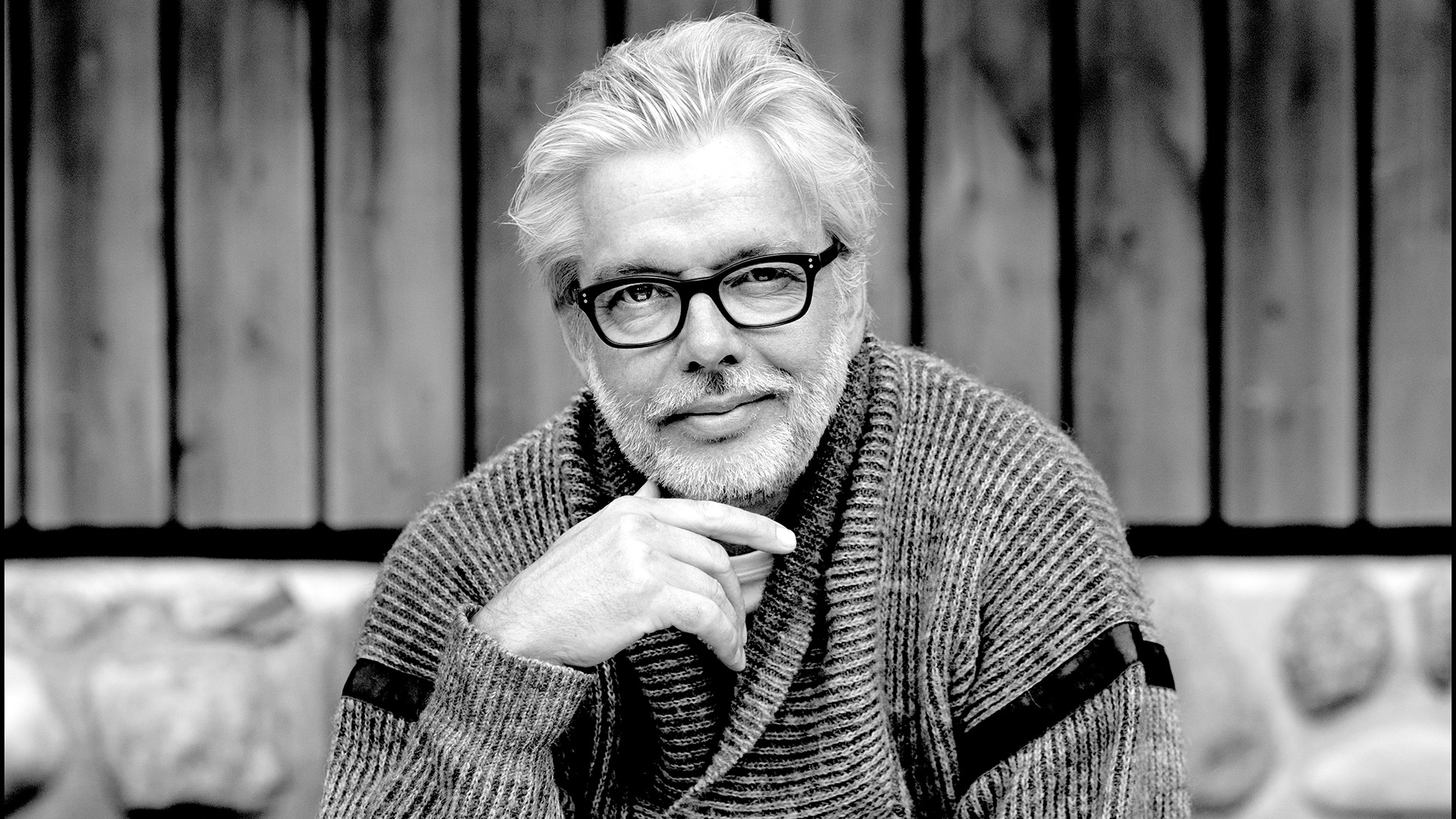
Jukka-Pekka Saraste, Chief Conductor and Artistic Director of the Helsinki Philharmonic Orchestra, has established himself as one of the outstanding conductors of his generation. Born in Finland in 1956, he began his career as a violinist. Today, he is renowned as an artist of exceptional versatility and breadth.
Saraste has previously held principal conductorships at the WDR Symphony Orchestra in Cologne, the Oslo Philharmonic Orchestra, the Finnish Radio Symphony Orchestra, the Toronto Symphony Orchestra, and the Scottish Chamber Orchestra, and has served as Principal Guest Conductor of the BBC Symphony Orchestra. As a guest conductor, he appears with major orchestras worldwide, including the Orchestre de Paris, the London Philharmonic Orchestra, the Staatskapelle Berlin, the Cleveland Orchestra, the New York Philharmonic Orchestra, and the Symphony Orchestras of Boston, Chicago, and San Francisco.
Coaching and mentoring young musicians is of great importance to Saraste. He is a founding member of the LEAD! Foundation, a mentorship programme for young conductors and soloists.
Anton Mejias
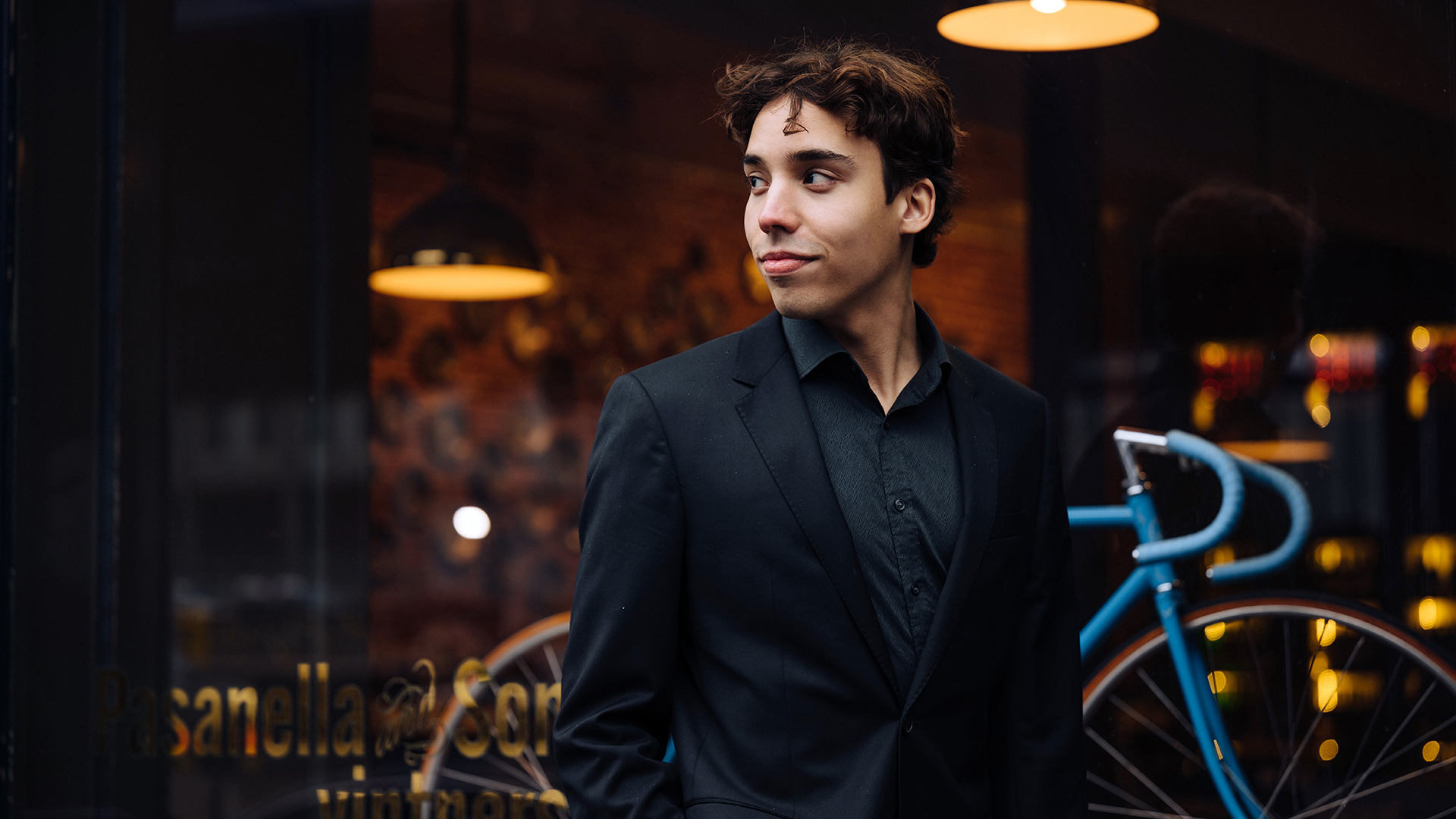
Pianist Anton Mejias (b. 2001) made his solo debut at the age of eight and had memorised the first book of Bach’s The Well-Tempered Clavier by the age of ten. Bach has remained at the centre of his artistic life ever since. His debut album, The Art of Memory, released by Deutsche Grammophon in spring 2025, features Bach’s Well-Tempered Clavier Book II interwoven with Philip Lasser’s 12 preludes, which Mejias also premiered to critical acclaim at the Dresden Music Festival.
Recent highlights include Brahms’s Piano Concerto No. 2 with the Orchestre National du Capitole de Toulouse under Tarmo Peltokoski and Prokofiev’s Piano Concerto No. 2 with the George Enescu Philharmonic in Bucharest. He has appeared as soloist with leading orchestras including the Los Angeles Philharmonic, Tampere Philharmonic, Hallé Orchestra, Deutsche Kammerphilharmonie Bremen and Latvian National Symphony Orchestra. A prizewinner at the Viotti Piano Competition and Nordic Piano Competition, Mejias received the 2024 Musikfest Bremen Award. He studied at the Curtis Institute of Music with Gary Graffman and Ignat Solzhenitsyn.
Helsinki Philharmonic Orchestra
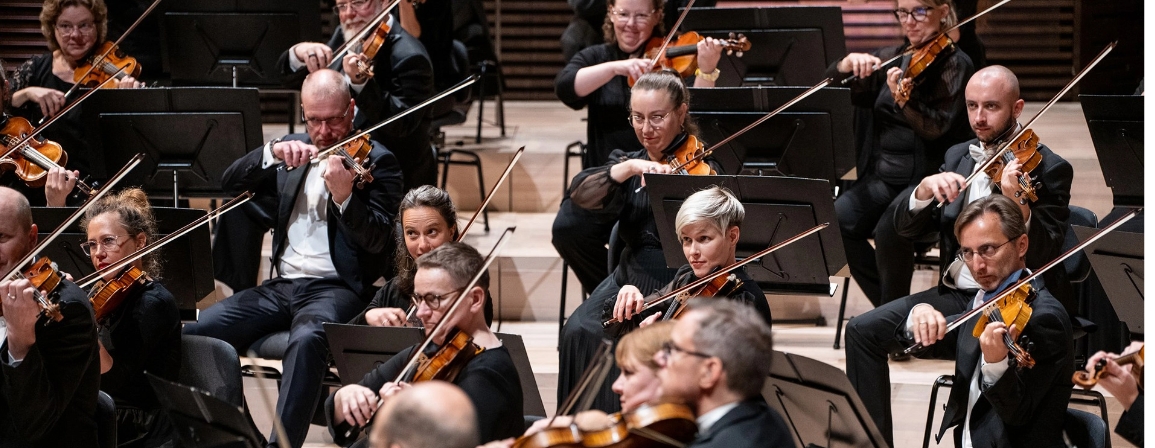
The principle of putting on regular concerts given by an orchestra of top musicians has remained right up to the present day in the over 140 years since the Helsinki Philharmonic Orchestra was formed. It premiered most of the symphonic works by Jean Sibelius with the composer himself conducting, and continues its commitment to contemporary music by commissioning works by composers both Finnish and foreign.
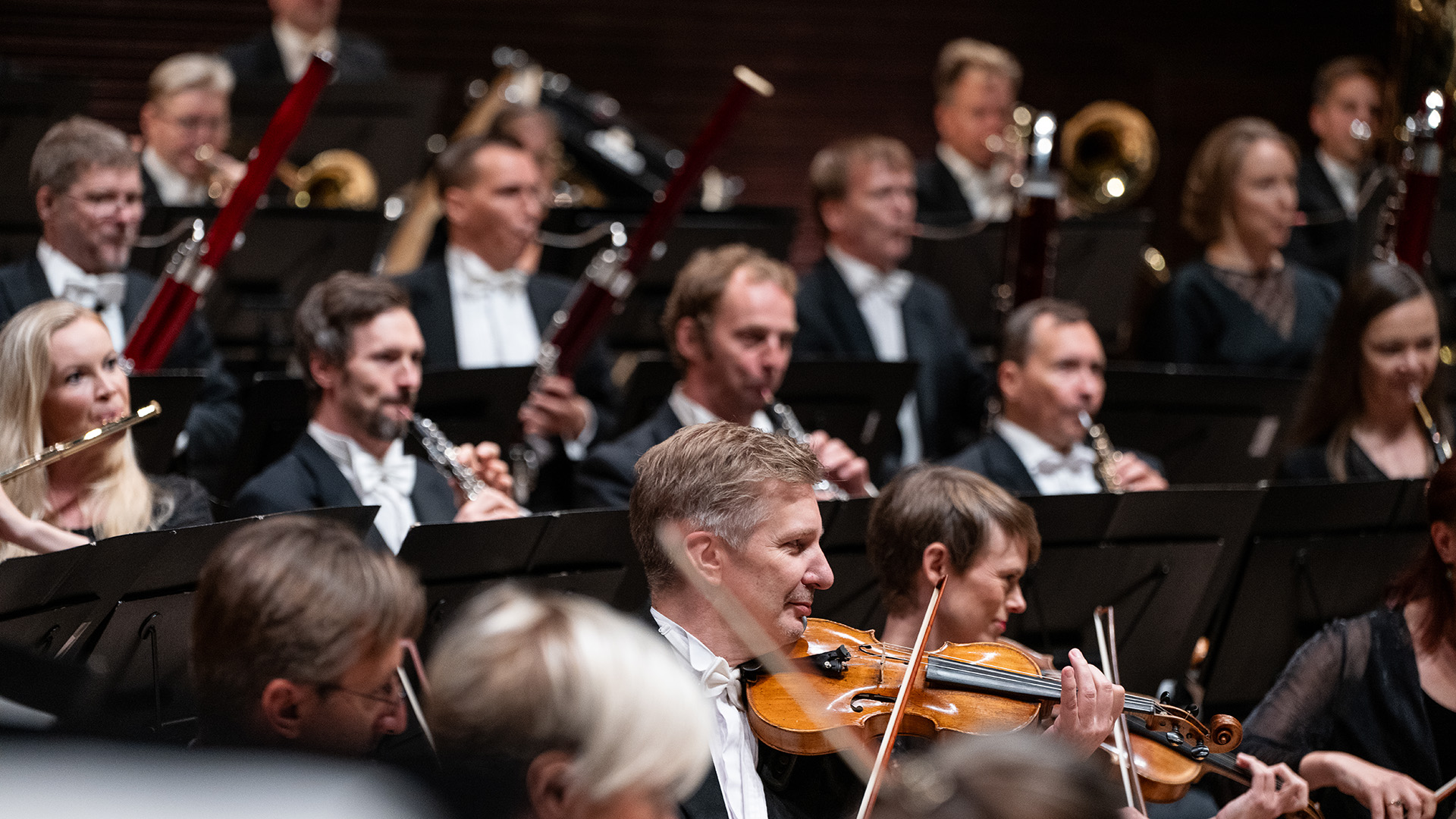
Now a band of 102 musicians, the Helsinki Philharmonic Orchestra annually performs to a total audience of over 100,000 and has become an important constituent of its host city’s cultural capital. The orchestra’s work also touches those who, for one reason or another, are unable to attend concerts at the Helsinki Music Centre. The orchestra performs in a variety of ensembles throughout Helsinki, provides performance opportunities for children and young people, and reaches special groups through its wide-ranging education and outreach activities. The orchestra’s HPO Kids program, launched in 2000, has expanded into Culture Kids, a city-wide cultural program for children across Helsinki.
Now a band of 102 musicians, the Helsinki Philharmonic Orchestra annually performs to a total audience of over 110,000.
In addition to its activities in Helsinki, the orchestra reaches international audiences through touring abroad and an active recording programme. The HKO Screen concerts, available online both as live streams and on-demand recordings, together with background interviews, bring viewers around the world closer to the creative process behind a musical work.
Jukka-Pekka Saraste has served as the chief conductor and artistic leader of the orchestra since 2023. During the seasons 2026–2028 the post of the principal guest conductor is filled by the orchestra itself, with concerts performed without a conductor and with programs planned by the musicians themselves.
- Pekka Kauppinen
Kreeta-Julia Heikkilä
Lina Leikola
Eija Hartikainen
Katariina Jämsä
Maiju Kauppinen
Kati Kuusava
Elina Lehto
Ilkka Lehtonen
Jani Lehtonen
Kari Olamaa
Petri Päivärinne
Kalinka Pirinen
Elina Viitasaari
Sirkku Helin
Anna Tanskanen
Anna-Leena Haikola
Kamran Omarli
Teija Kivinen
Liam Mansfield
Teppo Ali-Mattila
Eva Ballaz
Heini Eklund
Matilda Haavisto
Linda Hedlund
Krista Rosenberg
Ángeles Salas Salas
David Seixas
Virpi Taskila
Julien Malait
Torsten Tiebout
Lotta Poijärvi
Petteri Poijärvi
Aulikki Haahti-Turunen
Kaarina Ikonen
Tiila Kangas
Ulla Knuuttila
Carmen Moggach
Mariette Reefman
Markus Sallinen
Hajnalka Standi-Pulakka
Ezra Woo
Lauri Kankkunen
Tuomas Ylinen
Saara Särkimäki
Nadja Barrow
Jaani Helander
Veli-Matti Iljin
Jaakko Rajamäki
Ilmo Saaristo
Pekka Smolander
Tommi Wesslund
Ville Väätäinen
Oskari Hänninen
Johane Gonzalez Seijas
Paul Aksman
Eero Ignatius
Tuomo Matero
Adrian Rigopulos
Svenja Dose
- Niamh McKenna
Elina Raijas
Päivi Korhonen
Hannu Perttilä
Jussi Jaatinen
Nils Rõõmussaar
Samuel Buron-Mousseau
Luz Sedeño
Heikki Nikula
- Markus Tuukkanen
Mikko-Pekka Svala
Noora Van Dok
- Ruben Buils Garcia
Ville Hiilivirta
Miska Miettunen
Mika Paajanen
- Thomas Bugnot
Obin Meurin
Mika Tuomisalo
- Víctor Álvarez Alegría
Valtteri Malmivirta
Jussi Vuorinen
Ilkka Marttila
- Tomi Wikström
Xavi Castelló Aràndiga
Mikael Sandström
Pasi Suomalainen
Jani Niinimäki
- Minnaleena Jankko
- Anna Kuvaja
- Mikko Aspinen
- Matti Tähkävuori
Did you like it?
The trilingual website is designed to suit the dark environment of the concert hall, minimising disturbance to those seated nearby.
More musical energy
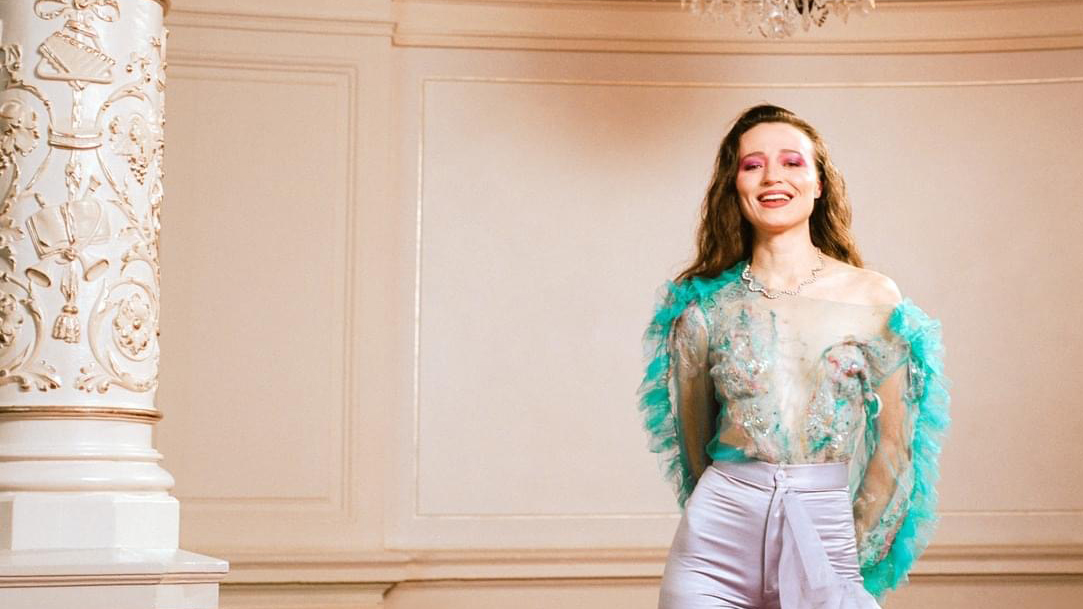
Mahler Chamber Orchestra
Thu 15/10/2026 klo 19
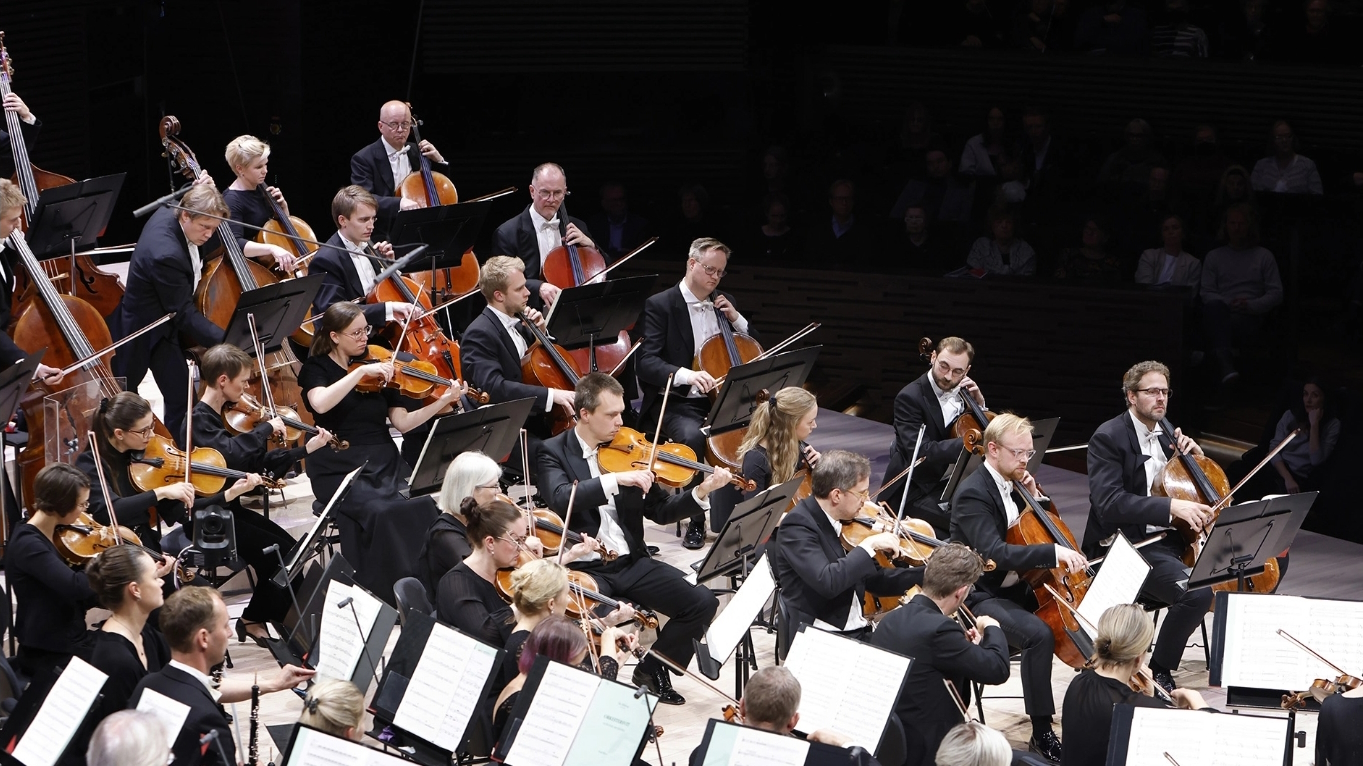
Next HKO screen #HKOSCREEN
Direct broadcast 02/09/2026 at 7PM
helsinginkaupunginorkesteri.fi | helsinki-kanava.fi
Production
Programme notes
Translations
Artist bios
Fotos
Contact details
www.helsinginkaupunginorkesteri.fi
helsinki.philharmonic@hel.fi
Helsingin kaupunginorkesteri
Musiikkitalo, Mannerheimintie 13 A, Helsinki
PL 10403, 00099 Helsingin kaupunki