Program
Return of the Heroes
Eva Ollikainen
Inmo Yang
Johannes Brahms (1833–1897)
Violin Concerto in D Major, Op. 77 (1878) 36'
- Allegro non troppo
- Adagio
- Allegro giocoso, ma non troppo vivace - Poco più presto
Richard Strauss (1864–1949)
Ein Heldenleben, Op. 40, symphonic poem (1898) 40'
- Der Held
- Des Helden Widersacher
- Des Helden Gefährtin
- Des Helden Walstatt
- Des Helden Friedenswerke
- Des Helden Weltflucht und Vollendung


Shh… Please remember to silence your mobile phone.
Photographs may be taken before the concert begins and during the applause.
Program notes
Johannes Brahms (1833–1897)
Johannes Brahms (1833–1897) boldly bucked mainstream trends. While many of his contemporaries swore by programme music in the Romantic vein, Brahms remained faithful to the ideals that dictated that subjective content was to be sublimated within the bounds of strict formal architecture. It is thus no surprise that he wrote a large number of pieces in the spirit of the Classical era: string quartets, piano trios, violin sonatas and symphonies. His four solo concertos – two for piano, one for violin and one for violin and cello – are also heavy on musical substance and avoid party tricks designed to make the audience’s jaws hit the floor.
Brahms wrote his Violin Concerto for his friend, violin virtuoso Joseph Joachim, in 1878. Joachim was a crucial influence on the shaping of the solo part, and he also wrote the demanding cadenza for the first movement. The work was premiered with Brahms conducting in Leipzig in 1879. The symphonically conceived concerto was received with mixed emotions, and several celebrated violinists refused to perform it, claiming that the solo part was unidiomatically written. Today, every self-respecting violinist will have tackled the Brahms Concerto at least once in their career, and it remains one of the most popular and most frequently performed works in its genre. The upbeat finale, infused with Hungarian tones, is familiar even to those who do not otherwise listen to classical music.
Richard Strauss (1864–1949)
Richard Strauss (1864–1949) wrote ten tone poems combining colourful orchestration with fantastic stories and a rich late Romantic idiom. The eighth of these, Ein Heldenleben (Life of a hero), was completed in parallel with Don Quixote in 1898. The latter is based on the eponymous novel about the Knight of the Sorrowful Countenance by Cervantes, and Ein Heldenleben was intended as a complement to it in the sense that it, too, is about a heroic main character. Here, however, the hero is Richard Strauss himself. For this reason, the work was dismissed as egomaniacal in its first performances. Attitudes are different today, since it is pretty much de rigueur for a composer to cast themselves as the heroic main character of their own lives, as we can see every day on social media: composers romanticise their life as an artist, promote their works and publish details about their private lives, all in the interests of creating a compelling public narrative. It is much the same thing that Strauss voiced in connection with Ein Heldenleben: “I am just as interesting as Napoleon.”
This tone poem is both a homage to and a parody of the hero myths of art music; it is both outrageously self-centred and playfully self-ironic. Its six movements form a dynamic arc under which the hero faces mockery from critics but also spends time with his nagging wife. Finally, he withdraws from the chaos of the world.
Jean Sibelius (1865–1957)
Many of the major works of Jean Sibelius (1865–1957) went through several laborious revisions before attaining their final form. His Violin Concerto, the tone poems Lemminkäinen, En Saga and The Bard and his First Symphony, to name a few, were premiered in versions that Sibelius subsequently felt he could not allow to stand.
Probably the most famous example of this, however, is his Fifth Symphony (1915–1919), which Sibelius spent a total of seven years writing and which had no fewer than three premieres. When he conducted the premiere of the first version of the Symphony, in four movements, he was already a celebrated national hero, and the work was of course received with acclaim. Yet he himself was not happy with it. In his rewrites, he strove for an increasingly integrated musical form where everything would be linked to everything else and not a single thematic occurrence would remain unjustified. The ultimate final version of the Fifth, premiered nearly four years after the first, became the high point of Sibelius’s symphonic development and the most frequently performed of all his symphonies.
Cast in three movements, the work presents its very limited set of materials on winds at the outset, motifs appearing out of the blue like rays of the sun penetrating the horizon. Soon they are fighting for space against a dark cloud cover, until the two combine forces and the heavens open to a blaze of fanfares. The second movement is a subdued set of variations whose tunes presage the finale, particularly its celebrated ‘swan theme’. The Symphony ends strangely, as if the composer were suddenly calling it quits in the midst of an ecstatic culmination. Is this what frustration sounds like?
Felix Mendelssohn (1809–1847)
Felix Mendelssohn (1809–1847) was the Sunday’s child of art music. He was born into the family of a banker, and his talent was noticed and nurtured at an early age. He was at home in the cultural circles of his community from childhood, was adept at networking and created a brilliant career as a composer, pianist and conductor. But the success story had its downside. Mendelssohn began to suffer from mounting self-criticism and turned into a perfectionist. He came to consider that he had written his best works in his teens. Eventually he became so insecure that he began to withhold his scores from the public.
One of the scores thus withheld was the Symphony in A major, written to a commission from the London Philharmonic Society. Its premiere in London in spring 1833 had been a huge success, but Mendelssohn, not pleased with the result, rewrote the score. Even then he was not happy, and the work was not printed until after his death. Traditionally numbered no. 4, it was in fact chronologically the third symphony that he wrote.
The Symphony was inspired by Mendelssohn’s trip to Italy in 1830. The second movement, for instance, was prompted by a religious procession in Naples. Mendelssohn would have been surprised at the enduring popularity of the work. He could not have guessed that audiences and musicians alike would continue to love its sunny disposition and brilliant orchestration. He would instead have moped over clumsy voice-leading or some such thing. Such can be the fate of a child prodigy.
Hugo Wolf (1860–1903)
Pjotr Tšaikovskin (1840–1893) kamppailu seksuaalisen identiteetin kanssa kulminoitui vuonna 1878. Silloin hänen kulissiavioliittonsa nuoreen naisoppilaaseen kaatui ennen kuin se ehti kunnolla alkaa. Hän joutui myöntämään olevansa homoseksuaali, tosin vain itselleen, mutta pakeni silti varmuuden vuoksi skandaalia Sveitsiin ja Italiaan, jotta saisi säveltää rauhassa juoruilta ja vainoilta. Kriisi vapautti Tšaikovskin taiteellisesti aivan uudelle tasolle. Etenkin sinfonioihin ilmestynyt elämäkerrallisuus tarjosi musiikin kerronnalle syvemmän, dramaattisia käänteitä tarjoavan pohjavireen.
Tšaikovskin kolme viimeistä sinfoniaa käsittelee kiellettyä, kohtalonomaista rakkautta, jota yksilön tahdonvoima ei kykene vastustamaan. Kuudes (1893) huipensi trilogian kouriintuntuvasti myös tosielämässä, sillä hän kuoli vain runsas viikko sinfonian kantaesityksen jälkeen. Arveltiin, että hänet olisi joko murhattu tai pakotettu itsemurhaan kostoksi paljastuneesta suhteestaan nuoreen sukulaispoikaan; todennäköisesti hän kuoli kuitenkin äkilliseen koleramyrkytykseen. Runsaat yhteensattumat ovat pitäneet huhut virkeinä näihin päiviin saakka.
Sinfonian lisänimi Pateettinen on Tšaikovskin veljen Modestin keksimä, ja harhaanjohtavasti käännetty. Venäjän kielessä pateettinen ei nimittäin tarkoita mahtipontista tai paatoksellista vaan pikemminkin tunteellista, intohimoista. Roihuavilla rakkauden tunnustuksilla alkava sinfonia päättyy pohjattomaan epätoivoon, kenties jopa kuolemaan.
Artists
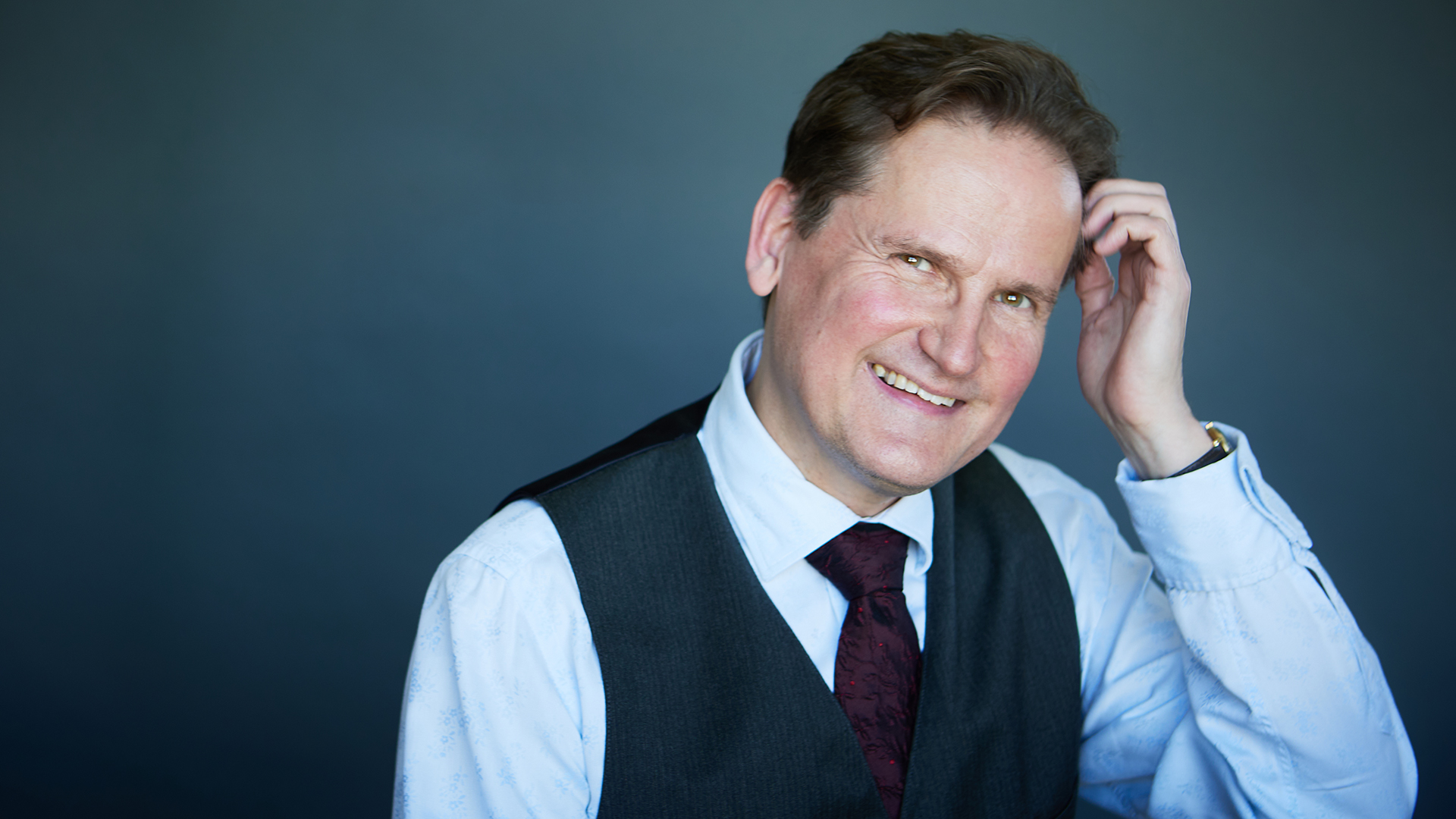
Eva Ollikainen

Conductor Eva Ollikainen is one of the leading conductors of our time. She has held previous positions as Chief Conductor and Artistic Director of the Iceland Symphony Orchestra, and Chief Conductor of the Nordic Chamber Orchestra.
The 2026/2027 season sees Ollikainen debut with the New York Philharmonic, National Symphony Orchestra Washington, Bamberger Symphoniker, hr Sinfonieorchester, Orchestre national du Capitole de Toulouse, Sydney Symphony Orchestra, Melbourne Symphony Orchestra, and Singapore Symphony Orchestra, among others. She also returns Los Angeles Philharmonic, Swedish Radio Symphony Orchestra and Wiener Symphoniker alongside further international engagements. She also returned to the BBC Proms with the BBC Symphony Orchestra and led the Iceland Symphony Orchestra on their European tour.
Curious about contemporary music, Eva Ollikainen has performed a wide range of repertoire with the Iceland Symphony during her tenure as Chief Conductor. In April 2026, Ollikainen and the Iceland Symphony Orchestra released Arvo Pärt: Complete Symphonies on Chandos to critical acclaim.
A former student of Leif Segerstam and Jorma Panula at the Sibelius Academy, Ollikainen won the Jorma Panula Conducting Competition at the age of 21. Today, the support of young musicians is close to her heart. She teaches regularly at the Sibelius Academy and leads masterclasses around Europe.
Inmo Yang
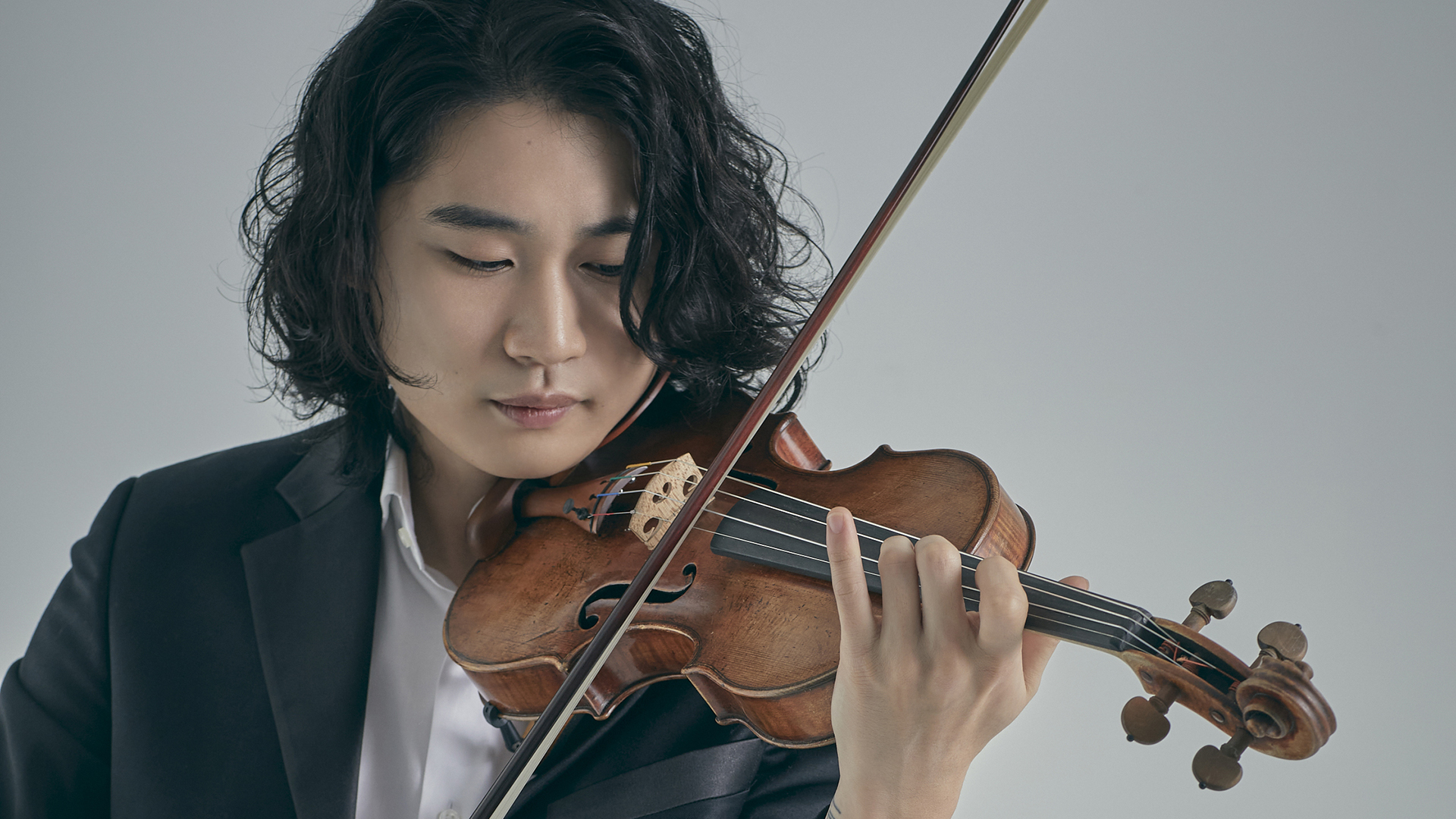
South Korean violinist Inmo Yang (b. 1995) first gained international recognition by winning the Premio Paganini Competition in Genoa in 2015 as its youngest participant. He also received prizes for the audience favourite and best performance of a contemporary work. In 2022, Yang won the International Jean Sibelius Violin Competition. He also received a special prize for his performance of Magnus Lindberg’s commissioned work Caprice.
Yang has since appeared with leading orchestras including the New York Philharmonic, Los Angeles Philharmonic, Orchestre National de France, Orchestre de la Suisse Romande, BBC Symphony Orchestra, Dresdner Philharmonie, Hong Kong Philharmonic Orchestra and Seoul Philharmonic Orchestra.
Yang studied at Korea National University of Arts, the New England Conservatory in Boston, Kronberg Academy and the Hanns Eisler School of Music in Berlin. Yang performs on the 1743 “Carrodus” violin by Giuseppe Guarneri del Gesù, generously loaned by a member of the Stretton Society.
Helsinki Philharmonic Orchestra
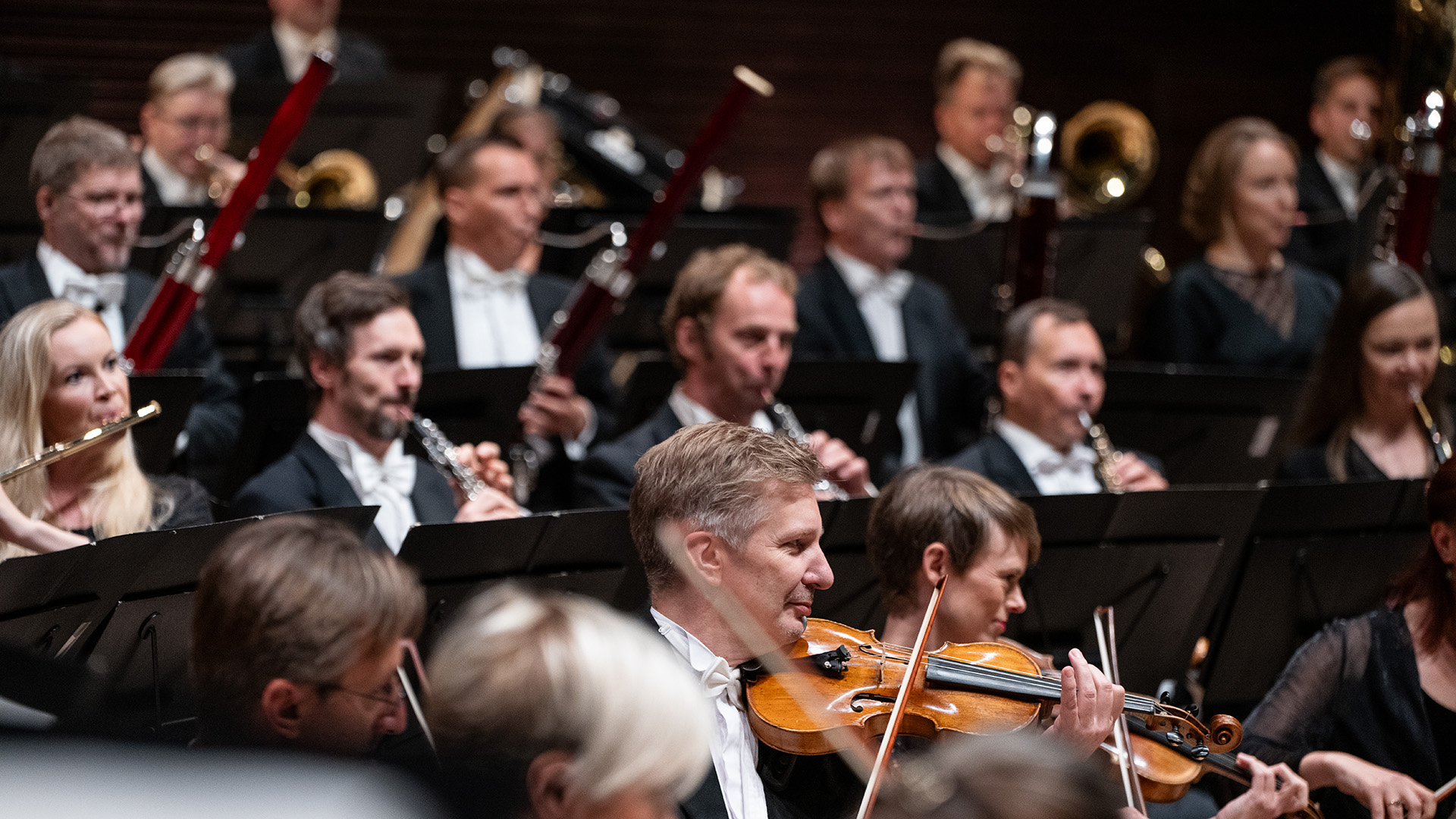
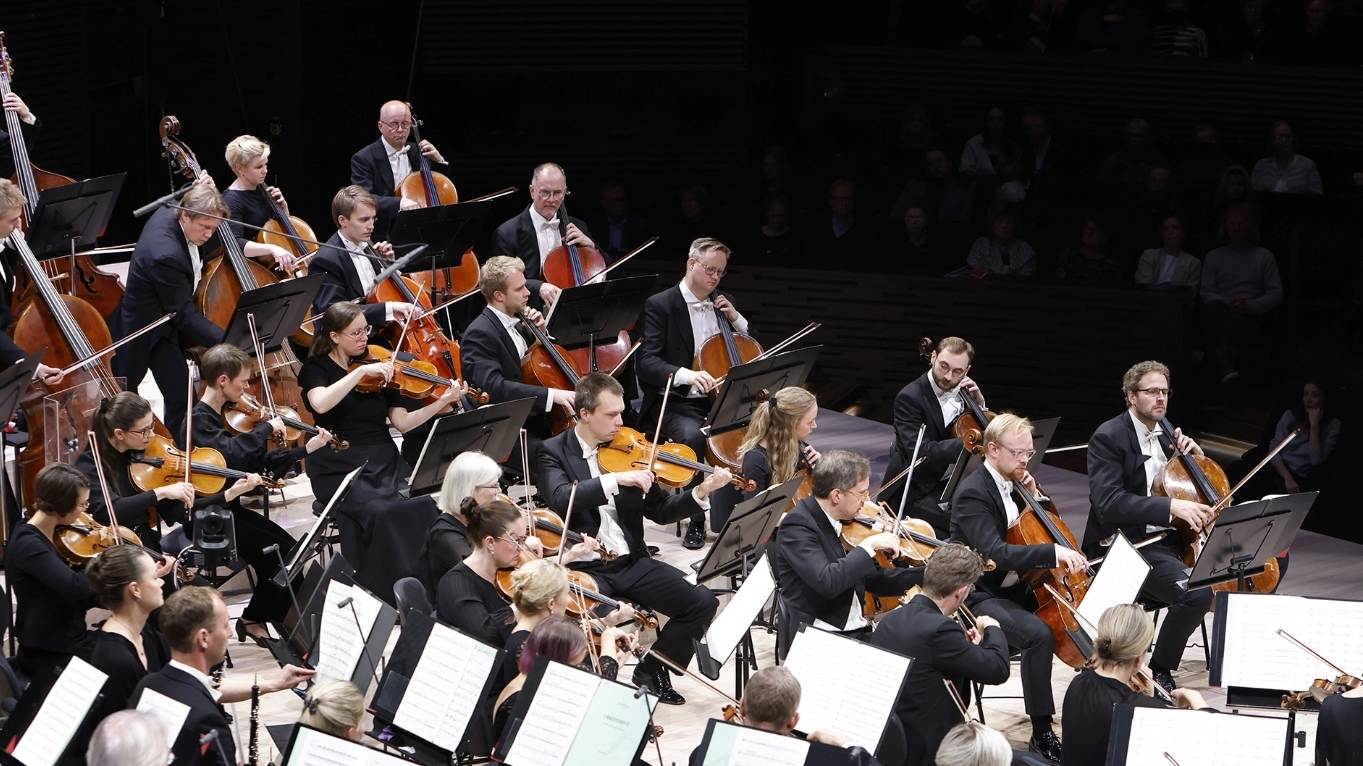
The principle of putting on regular concerts given by an orchestra of top musicians has remained right up to the present day in the over 140 years since the Helsinki Philharmonic Orchestra was formed. It premiered most of the symphonic works by Jean Sibelius with the composer himself conducting, and continues its commitment to contemporary music by commissioning works by composers both Finnish and foreign.
Now a band of 102 musicians, the Helsinki Philharmonic Orchestra annually performs to a total audience of over 100,000 and has become an important constituent of its host city’s cultural capital. The orchestra’s work also touches those who, for one reason or another, are unable to attend concerts at the Helsinki Music Centre. The orchestra performs in a variety of ensembles throughout Helsinki, provides performance opportunities for children and young people, and reaches special groups through its wide-ranging education and outreach activities. The orchestra’s HPO Kids program, launched in 2000, has expanded into Culture Kids, a city-wide cultural program for children across Helsinki.
Now a band of 102 musicians, the Helsinki Philharmonic Orchestra annually performs to a total audience of over 110,000.
In addition to its activities in Helsinki, the orchestra reaches international audiences through touring abroad and an active recording programme. The HKO Screen concerts, available online both as live streams and on-demand recordings, together with background interviews, bring viewers around the world closer to the creative process behind a musical work.
Jukka-Pekka Saraste has served as the chief conductor and artistic leader of the orchestra since 2023. During the seasons 2026–2028 the post of the principal guest conductor is filled by the orchestra itself, with concerts performed without a conductor and with programs planned by the musicians themselves.
- Kreeta-Julia Heikkilä
- Pekko Pulakka
- Sara Etelävuori
Maiju Kauppinen
Helmi Kuusi
Elina Lehto
Ilkka Lehtonen
Jani Lehtonen
Kari Olamaa
Petri Päivärinne
Kalinka Pirinen
Elina Viitasaari
Sari Deshayes
Ji Won Kim
Sayaka Kinoshiro
Siljamari Heikinheimo
Kamran Omarli
Liam Mansfield
Eva Ballaz
Teppo Ali-Mattila
Heini Eklund
Serguei Gonzalez Pavlova
Matilda Haavisto
Siiri Rasta
Krista Rosenberg
David Seixas
Katariina Lankinen
Emmi Peltola
Tuuli Talvitie
Atte Kilpeläinen
Torsten Tiebout
Petteri Poijärvi
Aulikki Haahti-Turunen
Kaarina Ikonen
Tiila Kangas
Carmen Moggach
Liisa Orava
Mariette Reefman
Annariina Jokela
Olli Kilpiö
Martta Wahlberg
Lauri Kankkunen
Tuomas Ylinen
Jaani Helander
Mathias Hortling
Veli-Matti Iljin
Jaakko Rajamäki
Pekka Smolander
Johannes Välja
Sami Mäkelä
Eeva Rysä
Oskari Hänninen
Eero Ignatius
Johane Gonzalez Seijas
Ville Väätäinen
Martti Genevet
Iikka Järvi
Mikko Kujanpää
Helmi Tikkanen
- Niamh McKenna
Päivi Korhonen
Jenny Villanen
Janette Leván
Francisco Almazán
Eemeli Nevalainen
Sole Terästö
Paula Malmivaara
Samuel Buron-Mousseau
Mathias Landeau
Anna-Maija Korsimaa
Heikki Nikula
- Mikko-Pekka Svala
Eli Holmes
Bogaç Ipekliogullari - Erkki Suomalainen
- Ville Hiilivirta
Ruben Buils Garcia
Miska Miettunen
Mika Paajanen
Joonas Seppelin
Hannu Kilpi
Pasi Tiitinen
Erno Toikka
Jaakko Välimäki
- Thomas Bugnot
Obin Meurin
Michael Olsen
Pedro Dantas
Scott Natzke
- Valtteri Malmivirta
Francisco Couto
Anu Fagerström
Matts Remell (Euphonium)
Ilkka Marttila
- Tomi Wikström
Xavi Castelló Aràndiga
Mikael Sandström
Pasi Suomalainen
Sampo Kuusisto
- Anni Kuusimäki
Minnaleena Jankko
- -
- Mikko Aspinen
- Matti Tähkävuori
- Peetu Hänninen
More musical energy
Heavenly lights
Next HKO screen #HKOSCREEN
Direct broadcast 28/10/2026 at 7PM
helsinginkaupunginorkesteri.fi | helsinkikanava.fi
Production
Programme notes
Translations
Artist bios
Fotos
Contact details
www.helsinginkaupunginorkesteri.fi
helsinki.philharmonic@hel.fi
Helsingin kaupunginorkesteri
Musiikkitalo, Mannerheimintie 13 A, Helsinki
PL 10403, 00099 Helsingin kaupunki