Program
Heavenly lights
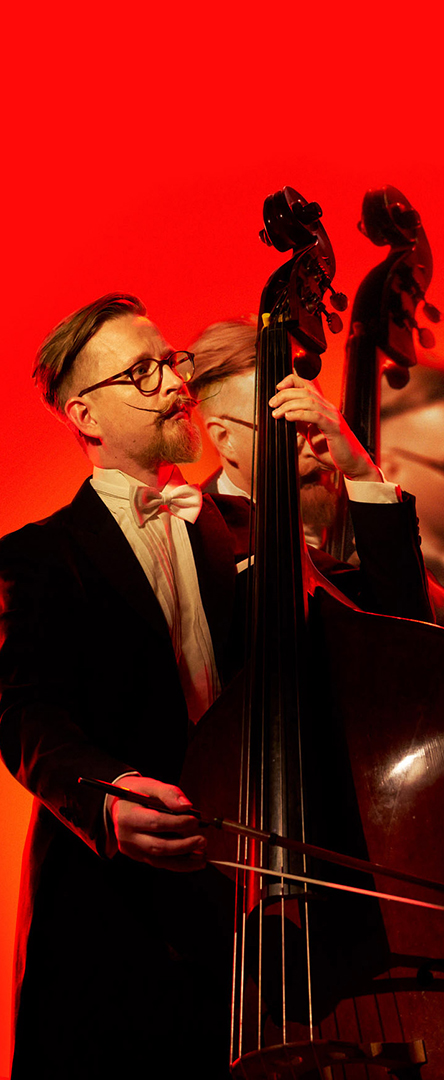

Olli Mustonen
Ian Bostridge
Anatoli Lyadov (1855–1914)
Kikimora, Op. 63 (1909) 7'
Olli Mustonen (1967–)
Symphony No. 3 "Heavenly Lights" for tenor and orchestra (2020) 29'
- I Have a Good Mind
Still the Sun Is Not Shining
The Bird Sets About Talking
He Went to Väinämöinen
Sergei Prokofiev (1891–1953)
Symphony No. 3 in C Minor, Op. 44 (1928) 34'
- Moderato
Andante
Allegro agitato
Andante mosso - Allegro moderato


Shh… Please remember to silence your mobile phone.
Photographs may be taken before the concert begins and during the applause.
Program notes
Anatoli Lyadov (1855–1914)
Anatoli Lyadov (1855–1914) was a teacher of composition and music theory at the St Petersburg Conservatory, where his pupils included Serge Prokofiev and Nikolai Myaskovsky. As a composer, Lyadov had no shortage of ideas. Where he did fall short was on patient, sustained work, and he only completed a small number of compositions. It is also scarcely surprising that most of these are brief miniatures for piano or orchestra. None of his planned extensive works, such as an opera about the Apocalypse, ever progressed beyond the idea stage. His procrastination ruined any chances he might have had of making a name for himself beyond Russia. When the Ballets Russes commissioned a new piece from him in 1909, nothing happened. The commission was then diverted to a young gentleman named Igor Stravinsky, who delivered Firebird.
Kikimora (1909) is one of Lyadov’s most popular orchestral pieces. It is based on the legend of a malevolent witch who lives in the cellar or behind the stove and loves to create disturbances and break dishes. In Lyadov’s version, the witch grows up in the mountains, takes an interest in the rest of the world and begins to terrorise it. This is a brief piece but a celebration of rich orchestral colour and ominous moods.
Olli Mustonen (1967–)
Olli Mustonen (b. 1967) has created an international career, initially as a pianist and later as a conductor. He also found a creative outlet in writing music since childhood: he went to study composition with Einojuhani Rautavaara in the 1970s. Mustonen’s musical idiom has Neo-Classical, minimalist and colourfully fantastic characteristics that in some way recall the music of his mentor, Rodion Shchedrin. Many of Mustonen’s works are rooted in national topics and folk tradition, leading to him being described as a “modern National Romantic”. His output consists mostly of orchestral and chamber music. In 2014, the Helsinki Philharmonic Orchestra premiered his Symphony no. 2, Johannes Angelos, commissioned by the orchestra, with Mustonen himself conducting.
Symphony no. 3, Taivaanvalot (Heavenly lights), was first performed as a chamber music work for tenor, cello and piano in 2016, but it was conceived from the first as a piece for tenor and orchestra. This final version was premiered in Turku in 2022 with Ian Bostridge as soloist and the Turku Philharmonic Orchestra conducted by Mustonen himself. The Symphony is based on a story from the Finnish national epic, the Kalevala: the Mistress of Pohjola captures the Sun and the Moon and locks them away, leaving the people of Kalevala in darkness. The text set comes from the English translation by Keith Bosley. The work is cast in a single movement and progresses mosaic-like from one scene to the next, concluding in a vocalise that conjures forth a sunrise.
Sergei Prokofiev (1891–1953)
In 1918, Sergei Prokofiev (1891–1953) left Russia to create an international career as a pianist and a composer. When the Chicago Opera commissioned him to write The Love for Three Oranges, he was excited enough to begin planning his next opera as well. He completed The Fiery Angel in 1927. There was a plan to premiere it in Berlin, but this project fell through. Prokofiev made several unsuccessful attempts to have the opera performed at other opera houses, and in the event The Fiery Angel was not given its premiere until after his death.
Annoyed by this score not generating any interest, in late 1928 Prokofiev wrote a Symphony in C minor based on material from the opera. The Symphony was premiered in Paris under Pierre Monteux in spring 1929.
The Fiery Angel is based on a Gothic novel by Valeri Bryusov. The main character, Renata, feels an erotic attraction to a fiery angel – though it is never made clear whether the angel is real or not. The story includes a duel, black magic and an orgy of nuns. At the end, the Inquisition sentences Renata to be burned at the stake. The music of the opera is just as fierce as one might imagine based on the above description. Prokofiev used several motifs from the opera, including those related to Renata, as the basis for developing new motifs. He did not, however, dilute any of the raw expressive power of The Fiery Angel, and with the exception of the lyrical second movement, the music varies between feverish and explosive.
Felix Mendelssohn (1809–1847)
Felix Mendelssohn (1809–1847) was the Sunday’s child of art music. He was born into the family of a banker, and his talent was noticed and nurtured at an early age. He was at home in the cultural circles of his community from childhood, was adept at networking and created a brilliant career as a composer, pianist and conductor. But the success story had its downside. Mendelssohn began to suffer from mounting self-criticism and turned into a perfectionist. He came to consider that he had written his best works in his teens. Eventually he became so insecure that he began to withhold his scores from the public.
One of the scores thus withheld was the Symphony in A major, written to a commission from the London Philharmonic Society. Its premiere in London in spring 1833 had been a huge success, but Mendelssohn, not pleased with the result, rewrote the score. Even then he was not happy, and the work was not printed until after his death. Traditionally numbered no. 4, it was in fact chronologically the third symphony that he wrote.
The Symphony was inspired by Mendelssohn’s trip to Italy in 1830. The second movement, for instance, was prompted by a religious procession in Naples. Mendelssohn would have been surprised at the enduring popularity of the work. He could not have guessed that audiences and musicians alike would continue to love its sunny disposition and brilliant orchestration. He would instead have moped over clumsy voice-leading or some such thing. Such can be the fate of a child prodigy.
Hugo Wolf (1860–1903)
Pjotr Tšaikovskin (1840–1893) kamppailu seksuaalisen identiteetin kanssa kulminoitui vuonna 1878. Silloin hänen kulissiavioliittonsa nuoreen naisoppilaaseen kaatui ennen kuin se ehti kunnolla alkaa. Hän joutui myöntämään olevansa homoseksuaali, tosin vain itselleen, mutta pakeni silti varmuuden vuoksi skandaalia Sveitsiin ja Italiaan, jotta saisi säveltää rauhassa juoruilta ja vainoilta. Kriisi vapautti Tšaikovskin taiteellisesti aivan uudelle tasolle. Etenkin sinfonioihin ilmestynyt elämäkerrallisuus tarjosi musiikin kerronnalle syvemmän, dramaattisia käänteitä tarjoavan pohjavireen.
Tšaikovskin kolme viimeistä sinfoniaa käsittelee kiellettyä, kohtalonomaista rakkautta, jota yksilön tahdonvoima ei kykene vastustamaan. Kuudes (1893) huipensi trilogian kouriintuntuvasti myös tosielämässä, sillä hän kuoli vain runsas viikko sinfonian kantaesityksen jälkeen. Arveltiin, että hänet olisi joko murhattu tai pakotettu itsemurhaan kostoksi paljastuneesta suhteestaan nuoreen sukulaispoikaan; todennäköisesti hän kuoli kuitenkin äkilliseen koleramyrkytykseen. Runsaat yhteensattumat ovat pitäneet huhut virkeinä näihin päiviin saakka.
Sinfonian lisänimi Pateettinen on Tšaikovskin veljen Modestin keksimä, ja harhaanjohtavasti käännetty. Venäjän kielessä pateettinen ei nimittäin tarkoita mahtipontista tai paatoksellista vaan pikemminkin tunteellista, intohimoista. Roihuavilla rakkauden tunnustuksilla alkava sinfonia päättyy pohjattomaan epätoivoon, kenties jopa kuolemaan.
Artists
Olli Mustonen
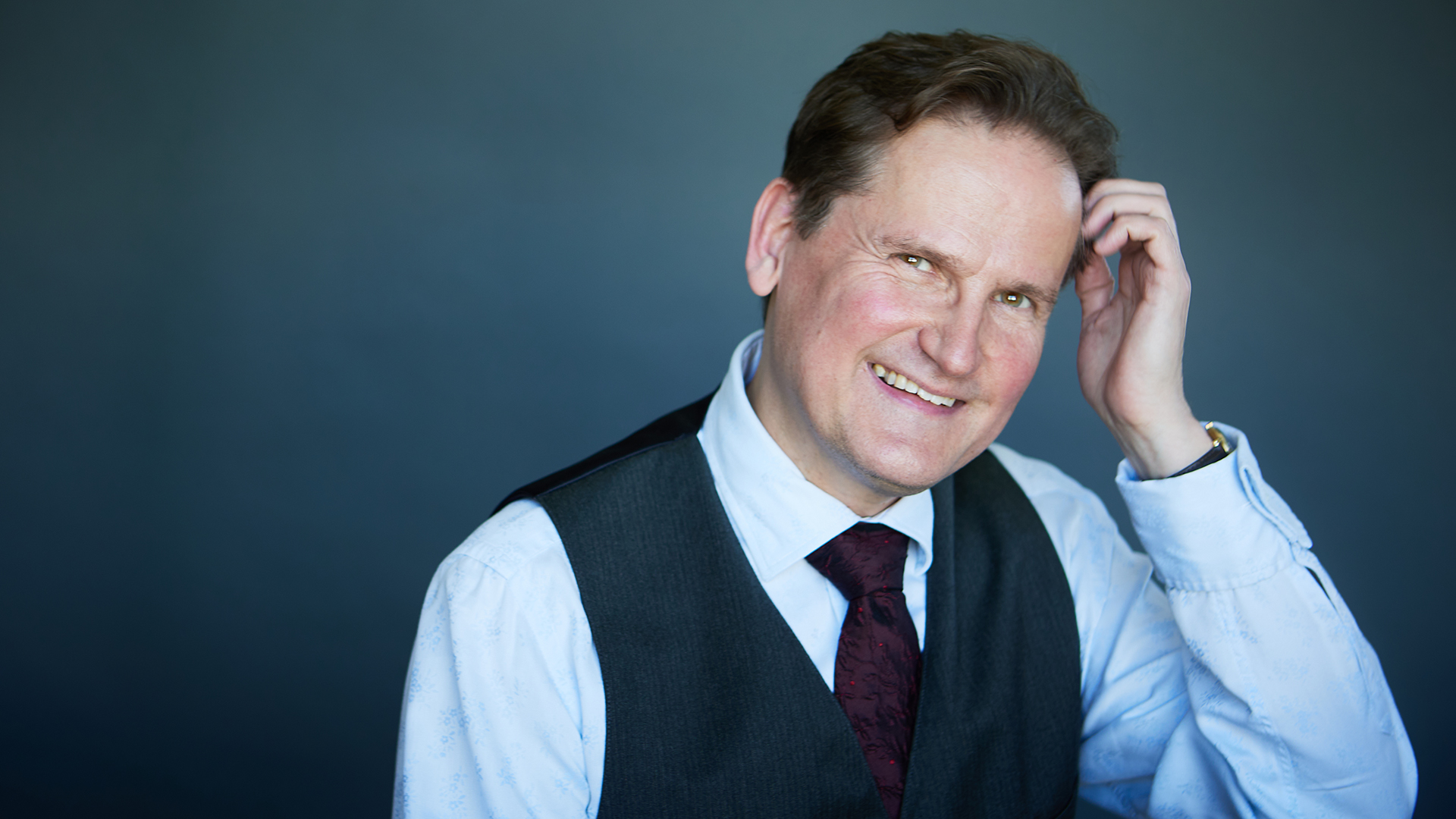
Olli Mustonen is a rare phenomenon in today’s musical life, combining careers as composer, pianist and conductor in the tradition of musicians such as Rachmaninov, Busoni and Enescu. From 2023 to 2025 he served as Principal Guest Conductor of the Lapland Chamber Orchestra, following his tenure as Artistic Director of the Turku Philharmonic Orchestra.
Mustonen made his conducting debut with the Helsinki Philharmonic in 1998 and has since appeared regularly as both conductor and pianist. The Helsinki Philharmonic also gave the premiere of his Symphony No. 2 in 2014.
Internationally, Mustonen has performed with many of the world’s leading orchestras, including the Berlin, New York and Los Angeles Philharmonics, the Chicago Symphony Orchestra, Cleveland Orchestra, Royal Concertgebouw Orchestra, Orchestre de Paris and Tonhalle-Orchester Zürich.
Ian Bostridge
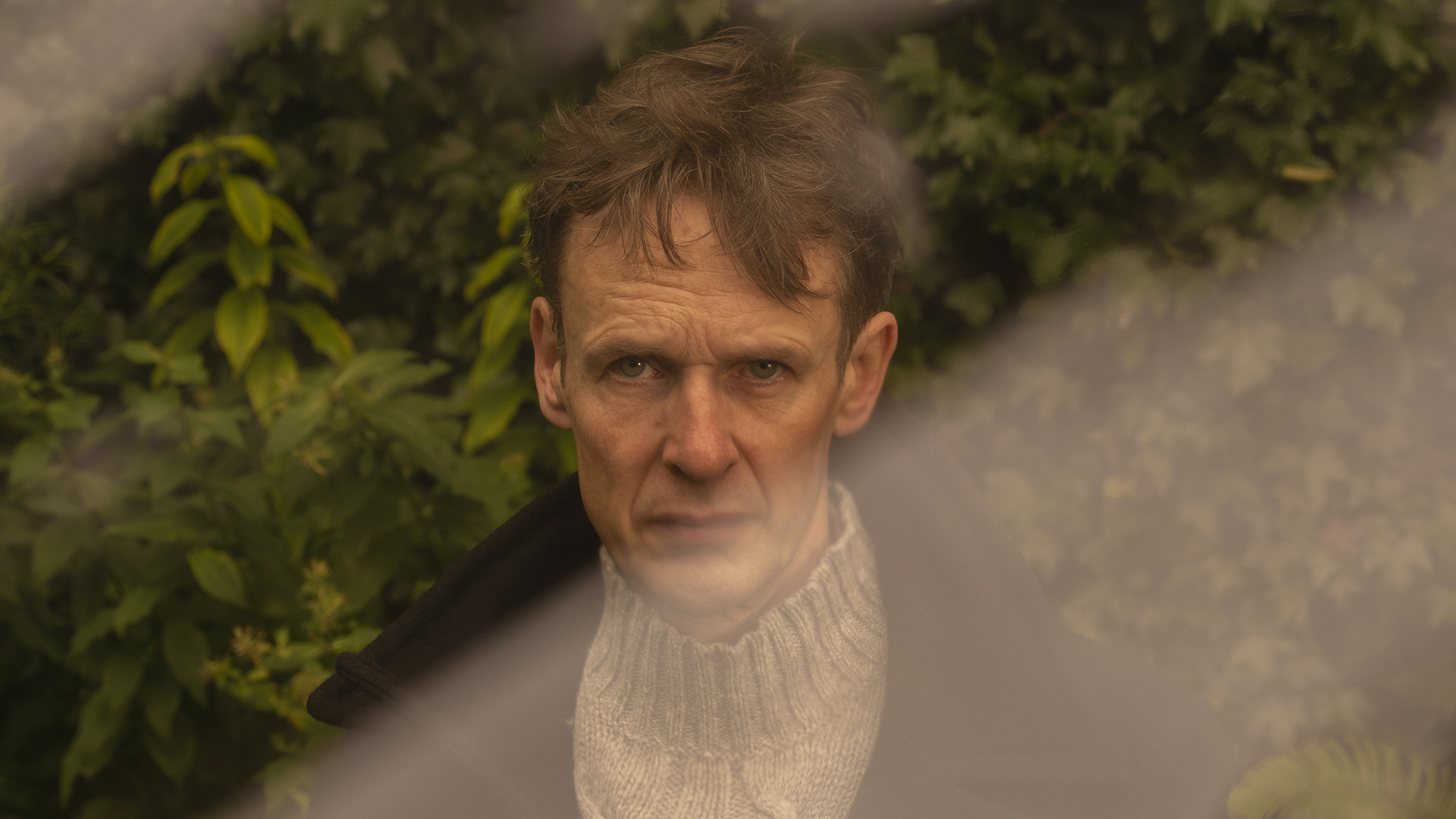
Ian Bostridge CBE (b. 1964) has enjoyed an extraordinary career, appearing at many of the world’s leading concert halls, opera houses and festivals. Particularly celebrated as an interpreter of Schubert and Britten, he has performed at the Salzburg, Edinburgh, Munich, Vienna, Aldeburgh and Schwarzenberg festivals, as well as Carnegie Hall, the Bayerische Staatsoper, La Monnaie and Teatro alla Scala.
His recordings have won numerous international awards and received 15 Grammy nominations. Highlights include Schubert’s Winterreise with Thomas Adès, winner of the 2020 International Classical Music Award, Die schöne Müllerin with Graham Johnson, Tom Rakewell in Stravinsky’s The Rake’s Progress under Sir John Eliot Gardiner, and Belmonte in Mozart’s Die Entführung aus dem Serail under William Christie.
An acclaimed author and scholar, Bostridge earned a doctorate in history from Oxford University. In 2004, he was appointed Commander of the Order of the British Empire (CBE).
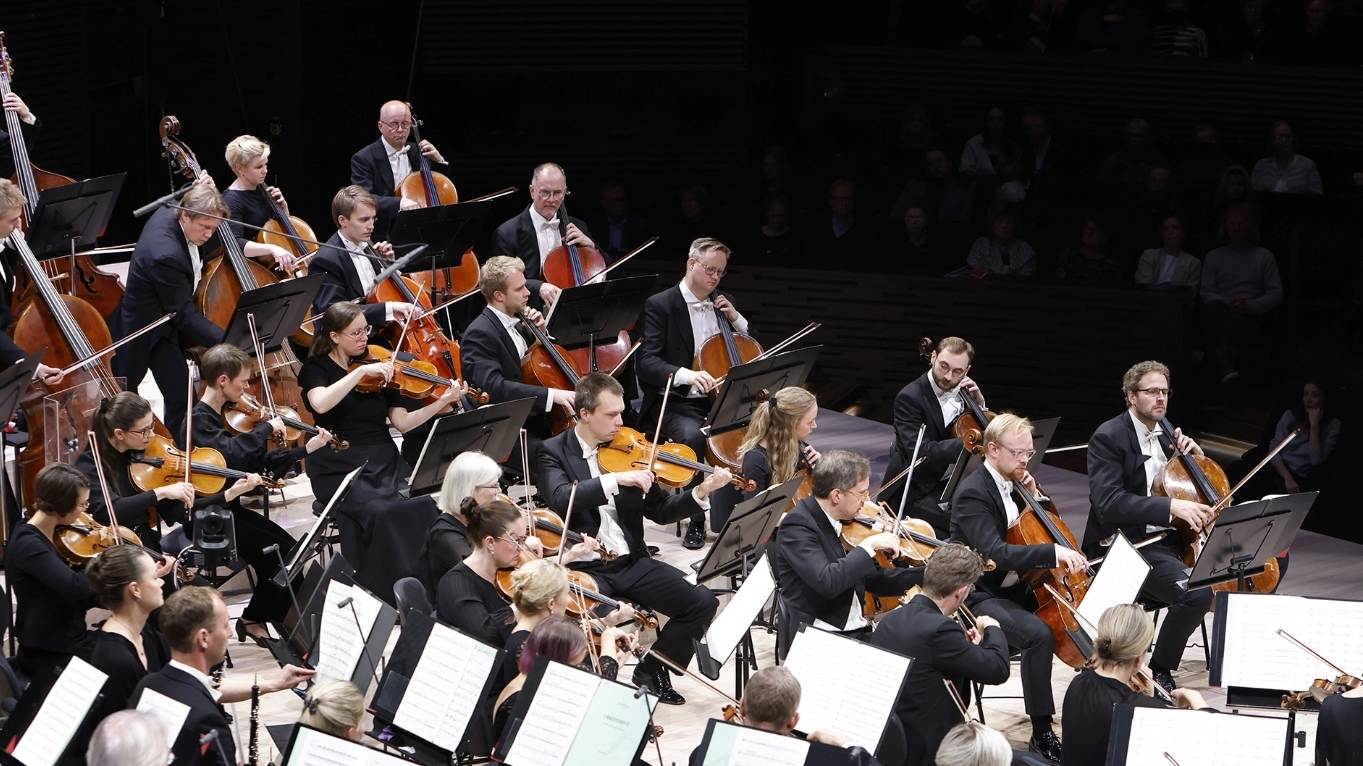
Helsinki Philharmonic Orchestra
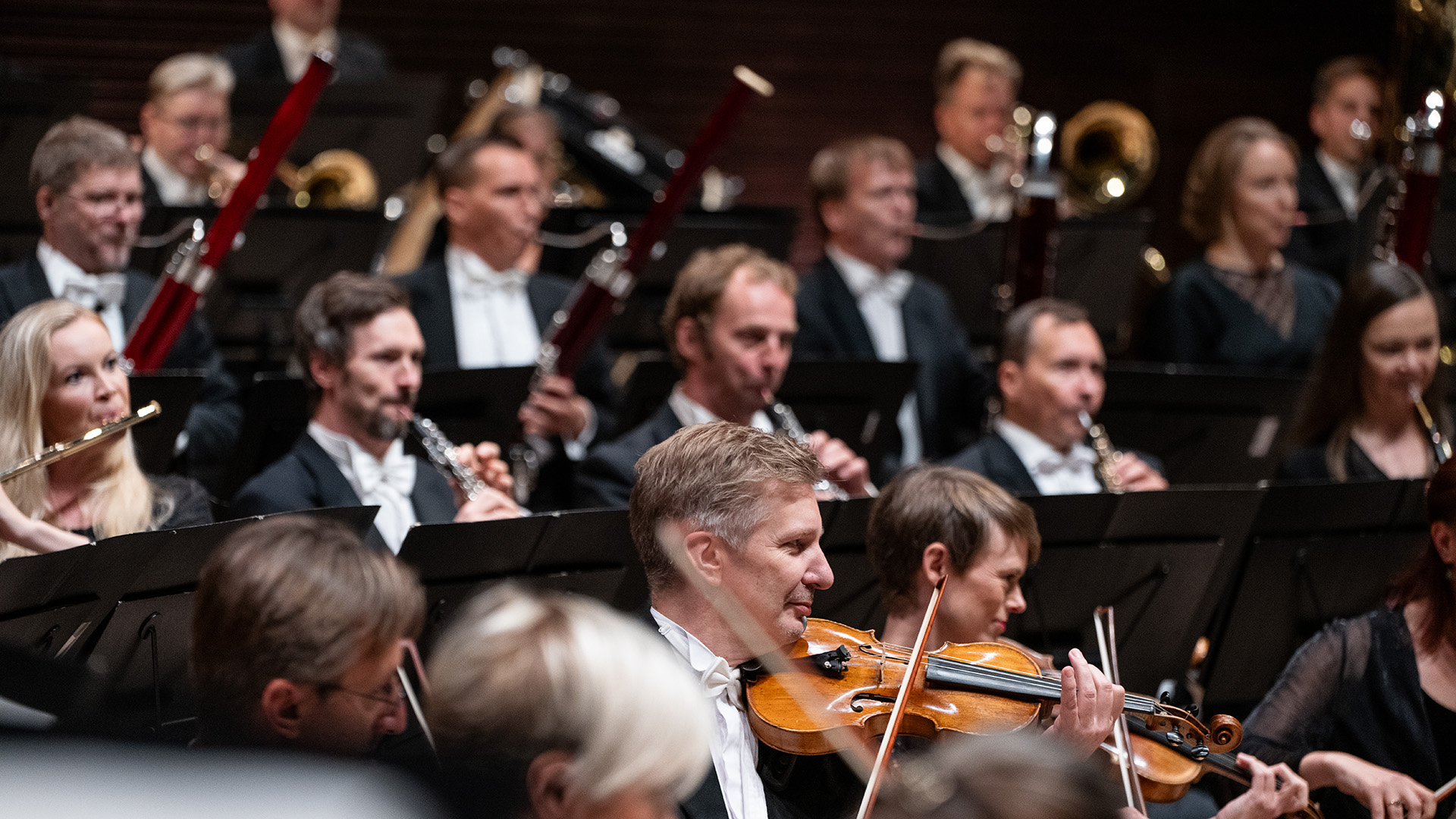
The principle of putting on regular concerts given by an orchestra of top musicians has remained right up to the present day in the over 140 years since the Helsinki Philharmonic Orchestra was formed. It premiered most of the symphonic works by Jean Sibelius with the composer himself conducting, and continues its commitment to contemporary music by commissioning works by composers both Finnish and foreign.
Now a band of 102 musicians, the Helsinki Philharmonic Orchestra annually performs to a total audience of over 100,000 and has become an important constituent of its host city’s cultural capital. The orchestra’s work also touches those who, for one reason or another, are unable to attend concerts at the Helsinki Music Centre. The orchestra performs in a variety of ensembles throughout Helsinki, provides performance opportunities for children and young people, and reaches special groups through its wide-ranging education and outreach activities. The orchestra’s HPO Kids program, launched in 2000, has expanded into Culture Kids, a city-wide cultural program for children across Helsinki.
Now a band of 102 musicians, the Helsinki Philharmonic Orchestra annually performs to a total audience of over 110,000.
In addition to its activities in Helsinki, the orchestra reaches international audiences through touring abroad and an active recording programme. The HKO Screen concerts, available online both as live streams and on-demand recordings, together with background interviews, bring viewers around the world closer to the creative process behind a musical work.
Jukka-Pekka Saraste has served as the chief conductor and artistic leader of the orchestra since 2023. During the seasons 2026–2028 the post of the principal guest conductor is filled by the orchestra itself, with concerts performed without a conductor and with programs planned by the musicians themselves.
- Sophie Heinrich
Pekka Kauppinen
Tami Pohjola
Eija Hartikainen
Katariina Jämsä
Maiju Kauppinen
Kati Kuusava
Elina Lehto
Ilkka Lehtonen
Jani Lehtonen
Kari Olamaa
Petri Päivärinne
Kalinka Pirinen
Elina Viitasaari
Anna Husgafvel
Tuuli Talvitie
Anna-Leena Haikola
Teija Kivinen
Kamran Omarli
Teppo Ali-Mattila
Eva Ballaz
Heini Eklund
Serguei Gonzalez Pavlova
Matilda Haavisto
Liam Mansfield
Jukka Pohjola
Siiri Rasta
Ángeles Salas Salas
David Seixas
Virpi Taskila
Torsten Tiebout
Atte Kilpeläinen
Lotta Poijärvi
Petteri Poijärvi
Aulikki Haahti-Turunen
Kaarina Ikonen
Tiila Kangas
Ulla Knuuttila
Maria Mangeloja
Carmen Moggach
Markus Sallinen
Hajnalka Standi-Pulakka
Tuomas Ylinen
Lauri Kankkunen
Beata Antikainen
Jaani Helander
Veli-Matti Iljin
Jaakko Rajamäki
Ilmo Saaristo
Saara Särkimäki
Pekka Smolander
Johannes Välja
Ville Väätäinen
Oskari Hänninen
Johane Gonzalez Seijas
Paul Aksman
Eero Ignatius
Tuomo Matero
Adrian Rigopulos
Pauli Pappinen
- Niamh McKenna
Päivi Korhonen
Jenny Villanen
Jussi Jaatinen
Paula Malmivaara
Nils Rõõmussaar
Anna-Maija Korsimaa
Heikki Nikula
Mathias Landeau
- Markus Tuukkanen
Bogaç Ipekliogullari
Vertti Tapanainen
- Ruben Buils Garcia
Ville Hiilivirta
Miska Miettunen
Mika Paajanen
Joonas Seppelin
Marian Strandenius
- Obin Meurin
Michael Olsen
Mika Tuomisalo
- Valtteri Malmivirta
Francisco Couto
Jussi Vuorinen
Ilkka Marttila
- Tomi Wikström
- Mikael Sandström
Xavi Castelló Aràndiga
Pasi Suomalainen
- -
- -
- Mikko Aspinen
- Matti Tähkävuori
- Peetu Hänninen
More musical energy

Tonight after Concert: Encounters Club – Olli’s Loose!
Next HKO screen #HKOSCREEN
Direct broadcast 11/11/2026 at 7 PM
helsinginkaupunginorkesteri.fi | helsinkikanava.fi
Production
Programme notes
Translations
Artist bios
Fotos
Contact details
www.helsinginkaupunginorkesteri.fi
helsinki.philharmonic@hel.fi
Helsingin kaupunginorkesteri
Musiikkitalo, Mannerheimintie 13 A, Helsinki
PL 10403, 00099 Helsingin kaupunki