Fireworks, Op. 4 (1908) 4'
Cello Concerto (1970) 23'
Petrushka, ballet (1911) 40'


Igor Stravinsky (1882–1971) began studying composition with Nikolai Rimsky-Korsakov in 1902. The young student thought highly of Rimsky particularly as a master of orchestration, but soon the maestro’s conservative taste began to bother him. He wanted to remain loyal to Rimsky but was also interested in the newest music of the day, particularly French composers such as Debussy and Dukas.
Stravinsky wrote a brief orchestral piece titled Feu d’artifice (Fireworks) in six weeks in the summer of 1908. It was an essay in combining Rimsky’s orchestral colours with French sonorities. He sent the score to his teacher, conscious of the risks: Rimsky would not necessarily approve of such music. We will never know what Rimsky would have thought of the piece, however, because he died before the score arrived in the mail. Stravinsky dedicated the piece to Rimsky’s daughter Nadezhda. She hated it.
Feu d’artifice was premiered in St Petersburg in early 1909. Serge Diaghilev, impresario of the Ballets Russes, was in the audience, and he immediately commissioned Stravinsky to write a ballet for him. Eighteen months later, Firebird made Stravinsky famous.
A solo concerto hinges on the relationship between soloist and orchestra. A composer may choose to frame it as healthy competition or heightened conflict. Witold Lutosławski (1913–1994) wrote a cello concerto rooted in antagonism.
The brilliant cellist Mstislav Rostropovich had been begging Lutosławski to write a piece for quite some time, but nothing came of it until the Royal Philharmonic Society in the UK actually commissioned him to write a work for cello and orchestra. The Cello Concerto was premiered in London in 1970. It caused a sensation and was quickly established as a modern classic.
The score includes aleatoric counterpoint, where each musician plays their part independently, though within certain limits. The work is in four sections. The cello and orchestra are at loggerheads from the outset, and in the course of the music they only rarely find agreement. This has been seen as a reflection of both Lutosławski’s experiences under the Communist regime in Poland and Rostropovich’s experiences as a musician openly contemptuous of the Soviet Union. Lutosławski denied this, but it is impossible for a societally aware listener to avoid an impression of an individual boldly standing in opposition to a totalitarian system. In this light, it is interesting to note that Rostropovich was convinced that the soloist ‘dies’ before the end of the piece. The composer said that this was not so, since the work ends in a triumphal procession. “Indeed,” said Rostropovich, “but the triumph is in the hereafter.”
The premiere in Paris in 1911 of the ballet Petrushka by Igor Stravinsky (1882–1971) was an absolute sensation in every way: music, choreography, staging and singing. He had composed it as a commission from the director of the Ballets Russes in Paris, Sergei Diaghilev, and based it on a piece for piano and orchestra he was already working on.
Petrushka is a puppet who comes to life and the ballet is set in a Shrovetide Fair. Stall-holders are shouting their wares, people are laughing, someone is playing a barrel organ, and a merry-go-round can be heard. A magician begins his performance and the crowd cries out in delight at the three dancing puppets: Petrushka, a Ballerina and a Moor. Petrushka is hopelessly in love with the Ballerina, who cares not a bit for him. When the Moor and the Ballerina dance cheek-to-cheek, Petrushka flies into a jealous rage and gets into a fight with the Moor, who kills him with his scimitar. Maybe they are only puppets, but Petrushka’s ghost is spotted on the roof.
Felix Mendelssohn (1809–1847) was the Sunday’s child of art music. He was born into the family of a banker, and his talent was noticed and nurtured at an early age. He was at home in the cultural circles of his community from childhood, was adept at networking and created a brilliant career as a composer, pianist and conductor. But the success story had its downside. Mendelssohn began to suffer from mounting self-criticism and turned into a perfectionist. He came to consider that he had written his best works in his teens. Eventually he became so insecure that he began to withhold his scores from the public.
One of the scores thus withheld was the Symphony in A major, written to a commission from the London Philharmonic Society. Its premiere in London in spring 1833 had been a huge success, but Mendelssohn, not pleased with the result, rewrote the score. Even then he was not happy, and the work was not printed until after his death. Traditionally numbered no. 4, it was in fact chronologically the third symphony that he wrote.
The Symphony was inspired by Mendelssohn’s trip to Italy in 1830. The second movement, for instance, was prompted by a religious procession in Naples. Mendelssohn would have been surprised at the enduring popularity of the work. He could not have guessed that audiences and musicians alike would continue to love its sunny disposition and brilliant orchestration. He would instead have moped over clumsy voice-leading or some such thing. Such can be the fate of a child prodigy.
Pjotr Tšaikovskin (1840–1893) kamppailu seksuaalisen identiteetin kanssa kulminoitui vuonna 1878. Silloin hänen kulissiavioliittonsa nuoreen naisoppilaaseen kaatui ennen kuin se ehti kunnolla alkaa. Hän joutui myöntämään olevansa homoseksuaali, tosin vain itselleen, mutta pakeni silti varmuuden vuoksi skandaalia Sveitsiin ja Italiaan, jotta saisi säveltää rauhassa juoruilta ja vainoilta. Kriisi vapautti Tšaikovskin taiteellisesti aivan uudelle tasolle. Etenkin sinfonioihin ilmestynyt elämäkerrallisuus tarjosi musiikin kerronnalle syvemmän, dramaattisia käänteitä tarjoavan pohjavireen.
Tšaikovskin kolme viimeistä sinfoniaa käsittelee kiellettyä, kohtalonomaista rakkautta, jota yksilön tahdonvoima ei kykene vastustamaan. Kuudes (1893) huipensi trilogian kouriintuntuvasti myös tosielämässä, sillä hän kuoli vain runsas viikko sinfonian kantaesityksen jälkeen. Arveltiin, että hänet olisi joko murhattu tai pakotettu itsemurhaan kostoksi paljastuneesta suhteestaan nuoreen sukulaispoikaan; todennäköisesti hän kuoli kuitenkin äkilliseen koleramyrkytykseen. Runsaat yhteensattumat ovat pitäneet huhut virkeinä näihin päiviin saakka.
Sinfonian lisänimi Pateettinen on Tšaikovskin veljen Modestin keksimä, ja harhaanjohtavasti käännetty. Venäjän kielessä pateettinen ei nimittäin tarkoita mahtipontista tai paatoksellista vaan pikemminkin tunteellista, intohimoista. Roihuavilla rakkauden tunnustuksilla alkava sinfonia päättyy pohjattomaan epätoivoon, kenties jopa kuolemaan.

Jukka-Pekka Saraste, Chief Conductor and Artistic Director of the Helsinki Philharmonic Orchestra, has established himself as one of the outstanding conductors of his generation. Born in Finland in 1956, he began his career as a violinist. Today, he is renowned as an artist of exceptional versatility and breadth.
Saraste has previously held principal conductorships at the WDR Symphony Orchestra in Cologne, the Oslo Philharmonic Orchestra, the Finnish Radio Symphony Orchestra, the Toronto Symphony Orchestra, and the Scottish Chamber Orchestra, and has served as Principal Guest Conductor of the BBC Symphony Orchestra. As a guest conductor, he appears with major orchestras worldwide, including the Orchestre de Paris, the London Philharmonic Orchestra, the Staatskapelle Berlin, the Cleveland Orchestra, the New York Philharmonic Orchestra, and the Symphony Orchestras of Boston, Chicago, and San Francisco.
Coaching and mentoring young musicians is of great importance to Saraste. He is a founding member of the LEAD! Foundation, a mentorship programme for young conductors and soloists.
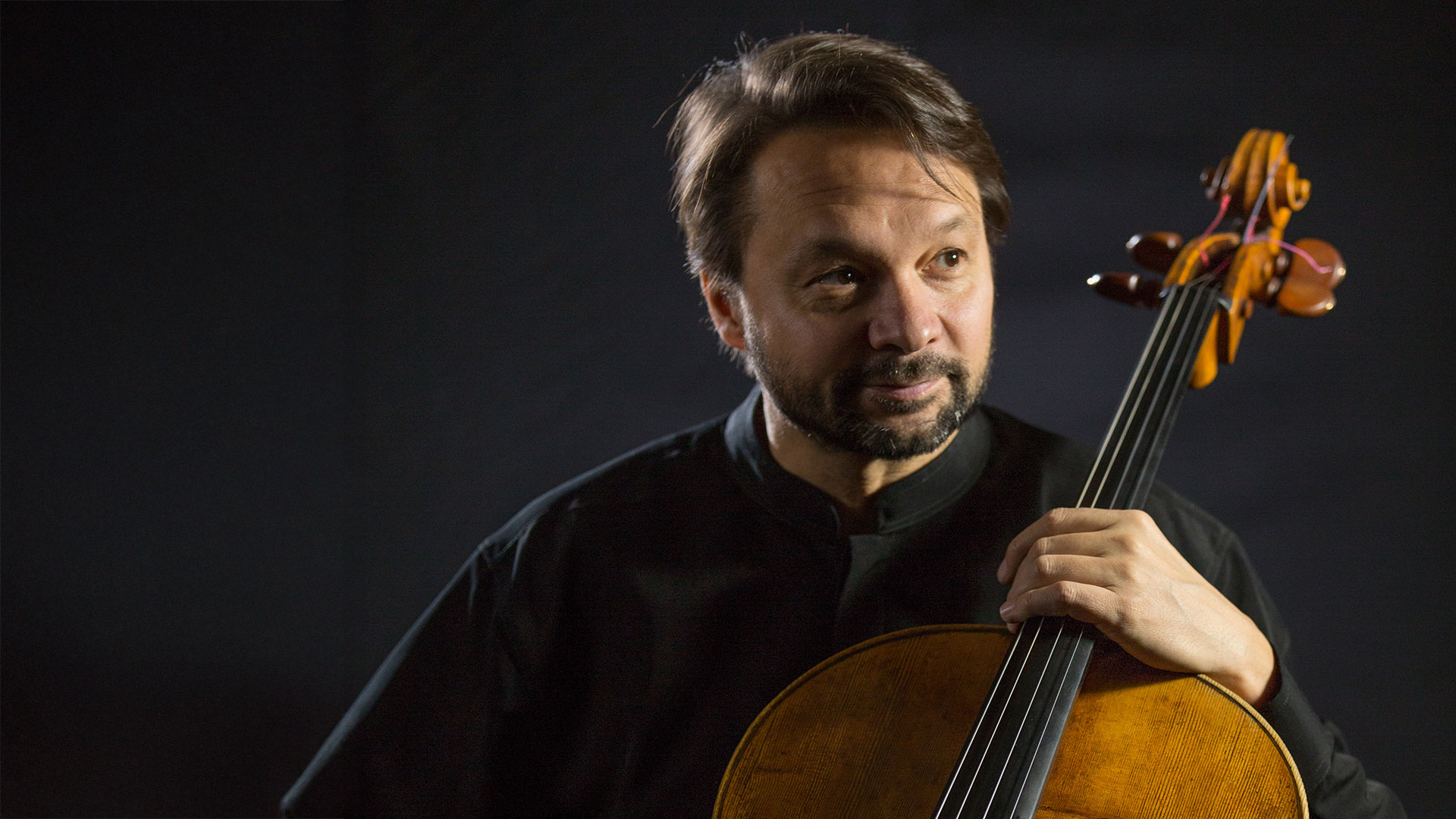
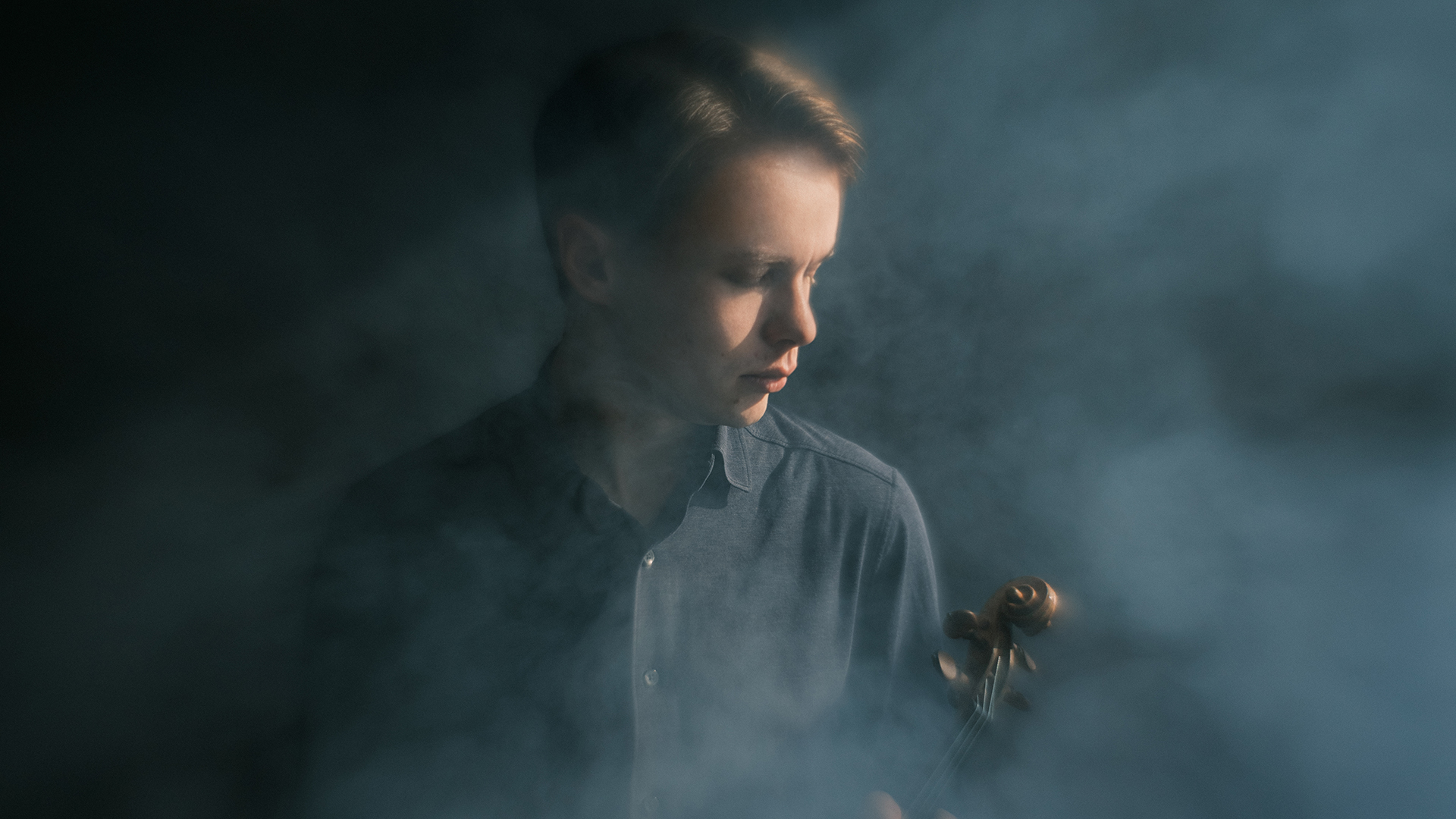
Marko Ylönen is one of Finland’s leading cellists, with an acclaimed international career.
Throughout his career, he has performed as a soloist, chamber musician, orchestral musician, artistic director and teacher. He has appeared widely across Europe, the United States, China, Japan, South Korea, Australia and New Zealand, and has made numerous recordings for labels including Ondine, BIS, Finlandia and Alba.
Ylönen’s repertoire spans from the Baroque era to contemporary music. Alongside the major works of the cello canon, he has been a dedicated advocate of Finnish composers such as Pehr-Henrik Nordgren, Einojuhani Rautavaara, Joonas Kokkonen, Jouni Kaipainen and Olli Mustonen.
He has received awards in several prestigious competitions. In 1990, he was awarded a prize at the International Tchaikovsky Competition in Moscow, and in 1996 he won the Concert Artists Guild Competition in New York.
Ylönen has appeared as a soloist with most Finnish orchestras as well as with Camerata Salzburg, the English Chamber Orchestra, The Prague Chamber Orchestra, the Adelaide Symphony Orchestra, the Melbourne Symphony Orchestra, the Stavanger Symphony Orchestra, the Netherlands Chamber Orchestra and the Gothenburg Symphony Orchestra. As a recitalist, he has performed at venues including Carnegie Hall in New York and the Concertgebouw in Amsterdam.
Ylönen has served as Artistic Director of the Korsholm Music Festival and LuostoClassic, and from 2026 onward he is responsible for the artistic planning of Larufest. Since 2009, he has been Professor of Chamber Music at the Sibelius Academy. His teachers have included Csaba Szilvay, Erkki Rautio, Heikki Rautasalo and Heinrich Schiff. He performs on a cello built by Bartolomeo Cristofori in the 1720s.
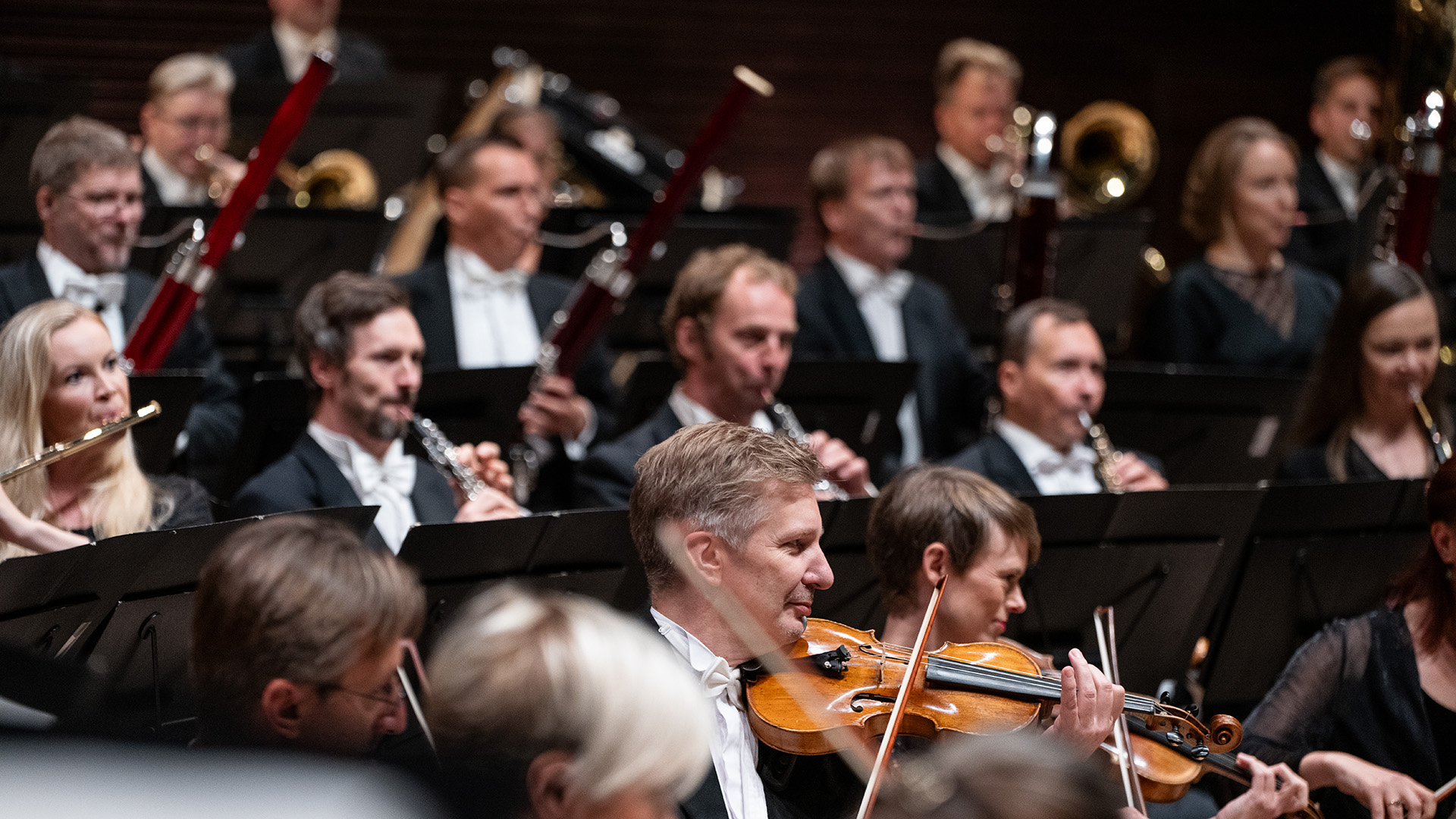
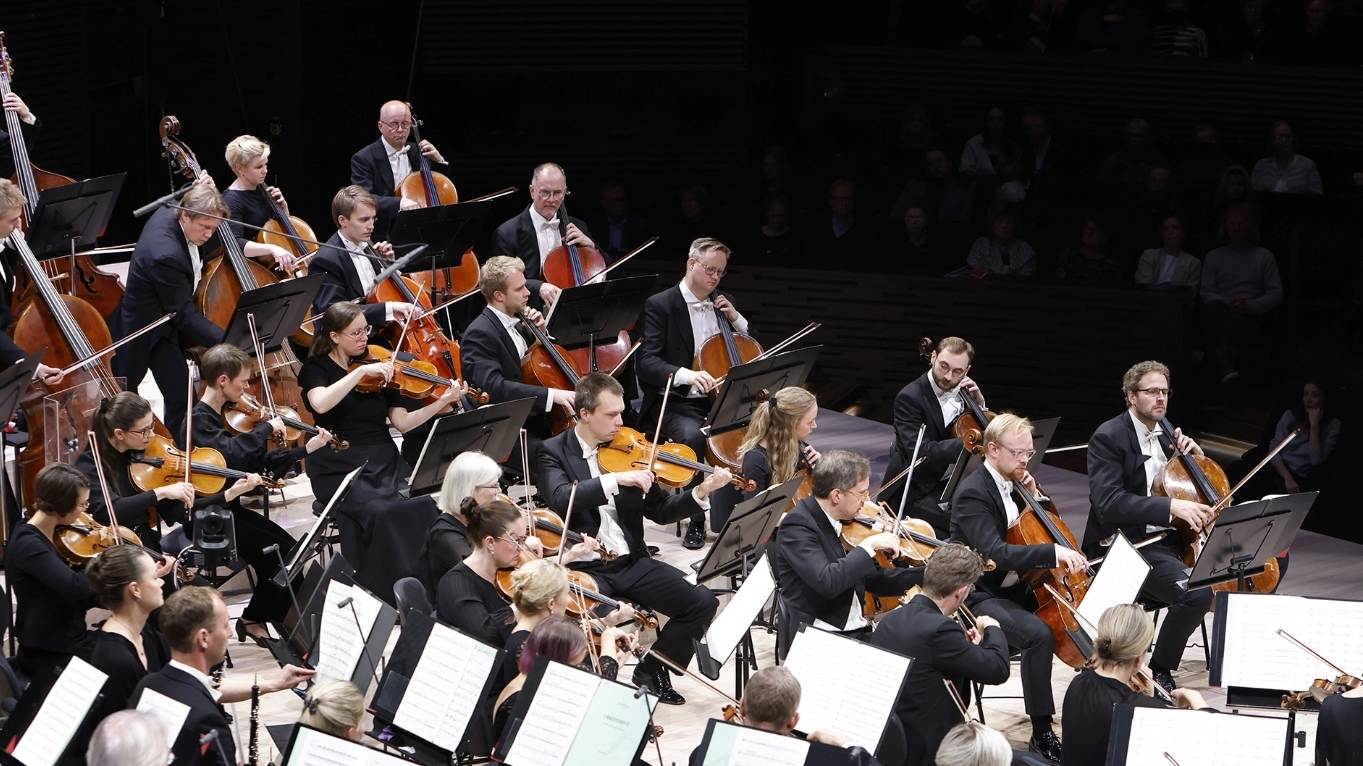
The principle of putting on regular concerts given by an orchestra of top musicians has remained right up to the present day in the over 140 years since the Helsinki Philharmonic Orchestra was formed. It premiered most of the symphonic works by Jean Sibelius with the composer himself conducting, and continues its commitment to contemporary music by commissioning works by composers both Finnish and foreign.
Now a band of 102 musicians, the Helsinki Philharmonic Orchestra annually performs to a total audience of over 100,000 and has become an important constituent of its host city’s cultural capital. The orchestra’s work also touches those who, for one reason or another, are unable to attend concerts at the Helsinki Music Centre. The orchestra performs in a variety of ensembles throughout Helsinki, provides performance opportunities for children and young people, and reaches special groups through its wide-ranging education and outreach activities. The orchestra’s HPO Kids program, launched in 2000, has expanded into Culture Kids, a city-wide cultural program for children across Helsinki.
In addition to its activities in Helsinki, the orchestra reaches international audiences through touring abroad and an active recording programme. The HKO Screen concerts, available online both as live streams and on-demand recordings, together with background interviews, bring viewers around the world closer to the creative process behind a musical work.
Jukka-Pekka Saraste has served as the chief conductor and artistic leader of the orchestra since 2023. During the seasons 2026–2028 the post of the principal guest conductor is filled by the orchestra itself, with concerts performed without a conductor and with programs planned by the musicians themselves.
Anna-Leena Haikola
Teija Kivinen
Kamran Omarli
Teppo Ali-Mattila
Eva Ballaz
Heini Eklund
Serguei Gonzalez Pavlova
Matilda Haavisto
Linda Hedlund
Siljamari Heikinheimo
Siiri Rasta
Krista Rosenberg
David Seixas
Virpi Taskila
Torsten Tiebout
Lotta Poijärvi
Petteri Poijärvi
Aulikki Haahti-Turunen
Kaarina Ikonen
Tiila Kangas
Carmen Moggach
Liisa Orava
Mariette Reefman
Hajnalka Standi-Pulakka
Anu Airas
Jaakko Laivuori
Lauri Kankkunen
Beata Antikainen
Jaani Helander
Mathias Hortling
Veli-Matti Iljin
Jaakko Rajamäki
Saara Särkimäki
Hans Schröck
Pekka Smolander
Johannes Välja
Ville Väätäinen
Oskari Hänninen
Johane Gonzalez Seijas
Paul Aksman
Eero Ignatius
Tuomo Matero
Joshua Baker
Svenja Dose
Hannu Perttilä
Carlos Yiu Erdocia
Jussi Jaatinen
Nils Rõõmussaar
Samuel Buron-Mousseau
Clara Riccucci
Anna-Maija Korsimaa
Heikki Nikula
Ilkka Marttila
Xavi Castelló Aràndiga
Pietari Huhtinen
Sampo Kuusisto
Antti Ohenoja
Petri Piiparinen
www.helsinginkaupunginorkesteri.fi
helsinki.philharmonic@hel.fi
Helsingin kaupunginorkesteri
Musiikkitalo, Mannerheimintie 13 A, Helsinki
PL 10403, 00099 Helsingin kaupunki